January 2026 Newsletter
|

A New Year, A Stronger ConnectionAs we enter 2026, we’re finding new ways to show the difference your support makes. To bring you a closer look at our work and its impact, Suncoast Waterkeeper is moving from a quarterly to a monthly newsletter. Each issue will be organized around how we protect our waterways: Monitor. Inform. Act. This new format will give you a clearer, more consistent view of the progress we’re making together, month by month. |
MONITOR
Is It Safe to Swim? Our 2025 Report Examines Swimmability at Local Bayside Sites
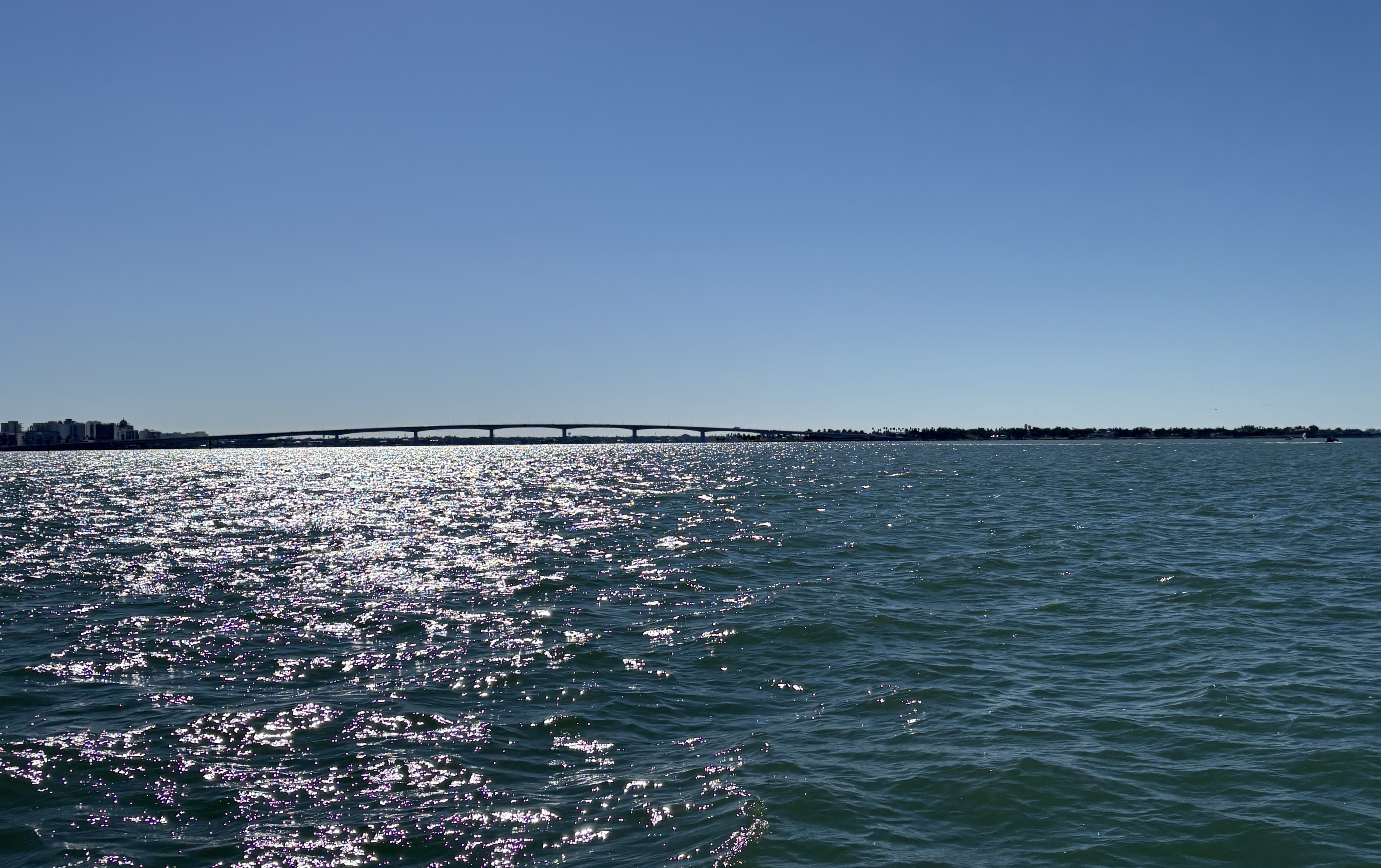
In 2025, the question “Is it safe to swim?” didn’t have a simple answer. Even without major hurricanes or extreme rainfall, water quality concerns continued at popular bayside recreation spots across the Suncoast. To help our community better understand what’s happening in our waterways, Suncoast Waterkeeper released the 2025 Suncoast Safe to Swim Summary Review.
The summary is a clear, visual story map built from weekly water quality sampling at 12 bayside sites from Terra Ceia Bay to Sarasota Bay. Our monitoring program follows the Florida Department of Health’s Healthy Beaches standards, which use enterococci as an indicator of bacteria linked to swimming-related illness. The 2025 review includes water quality grades, swimmability trends, a comparison to state water quality criteria, and maps showing stormwater and sewer infrastructure near sampling sites. Together, these elements highlight how human systems and environmental conditions influence water quality in the bays. One of the clearest findings from 2025 is that in some locations, bacteria levels are on track to exceed state standards, meaning some waters may no longer be safe for recreational uses.
“Our goal is to empower people with the knowledge they need to make informed decisions before entering our bays and waterways,” explained Dr. Abbey Tyrna, Executive Director & Waterkeeper of Suncoast Waterkeeper. “By tracking trends over time, we hope this information helps keep water recreators healthy today while also driving the long-term solutions needed to protect the Suncoast’s waters for the future.”
New This Year:
We have provided a site-by-site breakdown that provides an overall grade, the percentage of swimmable weeks, and potential sources of bacterial pollution for each location. This addition reflects the program’s next phase, which focuses on microbial source tracking (MST) to identify contamination sources.
In 2026, the organization will expand this work in partnership with Dr Valerie J Harwood and Dr. Aldo Lobos at the University of South Florida. The first site to be studied is the Town of Longboat Key Boat Ramp, where testing will help identify sources of bacteria and guide solutions to improve water quality for residents and visitors.
Suncoast Waterkeeper’s water quality monitoring program is supported by the Gulf Coast Community Foundation and the Charles and Margery Barancik Foundation. Results from weekly monitoring, including our newly expanded program from Siesta Key to Lemon Bay, are published every Friday on the Suncoast Waterkeeper Safe to Swim page, Facebook, Instagram, and Water Reporter.
A special thank you to the Gulf Coast Community Foundation and Charles & Margery Barancik Foundation for their generous support of our 2025 enterococci monitoring program.
REVIEW THE FULL REPORT
INFORM
Save Our Wetlands & A Local Voice for Local Waters: HB 479 and SB 718
On January 13, the Florida Legislative Session began, and it’s shaping up to be a consequential one for our waters. This session includes proposals that could strengthen water protections, alongside bills that may put them at risk. Our goal is to share clear, reliable information so you feel informed, empowered, and ready to use your voice. Suncoast Waterkeeper will be highlighting key bills and breaking down what they could mean for our waterways, public health, and way of life. First up: House Bill 479.
HB 479 would prevent local communities from adopting laws or policies that limit development activities beyond a wetland buffer of just 15 feet minimum and 25 feet on average. Here on the Suncoast, we know from experience that these narrow buffers are not enough. Healthy wetlands are the backbone of a resilient coastal ecosystem, and science shows wetlands require buffers of at least 50 feet to function properly.
Wetlands protect our coastlines from storms, provide critical habitat for Florida wildlife, filter nutrients to improve water quality, and absorb carbon dioxide. Collectively, they provide an estimated $23 billion in coastal protection services each year. In Manatee County, voters have already affirmed how much wetlands matter to our community. HB 479 would halt future efforts to strengthen those protections.
The companion bill, Senate Bill 718, takes the issue even further. SB 718 would block counties and municipalities from adopting stronger water management standards tailored to local needs. It would prohibit local laws related to water quality or quantity, pollution control, discharge prevention, or wetlands, placing all authority with the state. Simply put, SB 718 tells local governments: “You may not protect your waters if state law sets a weaker standard.”
At the moment, the two bills differ slightly in scope. We expect SB 718 to be amended to mirror HB 479’s wetland limitations, though that change has not yet appeared on the Florida Senate website as of January 28, 2026.
In any case, these bills prevent local governments from acting in their communities' best interests, especially for those of us on the coast, where wetlands pose real-world consequences to water quality and quantity. Excluding local communities from decision-making puts more than our waters at risk. It ties local hands, leaving them unable to address flooding and water pollution. And as a result, it threatens local businesses, workers, and families. This is especially concerning given the state’s failure to act on water quality issues, highlighted in the Tampa Bay Times Wasting Away series and reflected in the growing frequency of harmful algal blooms, failing wastewater systems, and worsening nutrient and bacterial pollution.
When action alerts go out, we hope you’ll reach out to your elected officials and share why clean water matters to you. Keep in mind that, in some cases, our local representatives have not come out to say whether they support a bill. These are opportunities to use your voice. When constituents like you engage, legislators listen. Respectful, thoughtful conversations are the most effective. Be clear, be courteous, and speak from your own experience. Florida’s waterways are not just abstract environmental features; they are the lifeblood of our economy, our quality of life, and our identity.
A Wake-Up Call for Manatee County's Drinking Water Supply
Manatee County could face a drinking water shortage within the next decade. According to County projections reported by the Bradenton Herald, daily water demand is expected to rise by 13%, increasing roughly from 48 million gallons per day to 54 million. This increase is not inevitable. It’s a wake-up call signaling that current policies are pushing the County toward a shortage that can still be prevented with smarter planning and stronger protections.
Rather than scrambling for new water sources, Manatee County must first take responsibility for how it manages and wastes the water it already has. The County should strengthen protections for recharge-areas, reduce water losses (that are currently estimated at nearly 10 percent), curb demand on freshwater supplies, and adopt smart-growth policies aligned with real water limits.
Conservation alone will not secure our future. Long-term water security depends on protecting the natural systems that supply our drinking water. Recharge wetlands, headwater streams, and their buffer zones in the Manatee River watershed filter and deliver water to the Manatee River and Lake Manatee. These areas were once safeguarded through Watershed Overlay Districts, but those protections were dismantled in 2023 and have not yet been fully restored. Even full restoration would only be a first step. Stronger protections are needed to reflect today’s development pressure and increasing demand on our water supply.
Manatee County now faces a perfect storm of drought, weakened recharge-area protections, and rapid population growth, all drawing from the same finite supply. A sustainable path forward means strengthening protections for wetlands and headwater streams, expanding reclaimed water for irrigation, reducing groundwater use, and aligning future development with real water limits. Our future depends not on finding more water, but on protecting and wisely managing the water we already have.
ACT
Stop the Skyway Cruise Port Petition - SIGN TODAY!
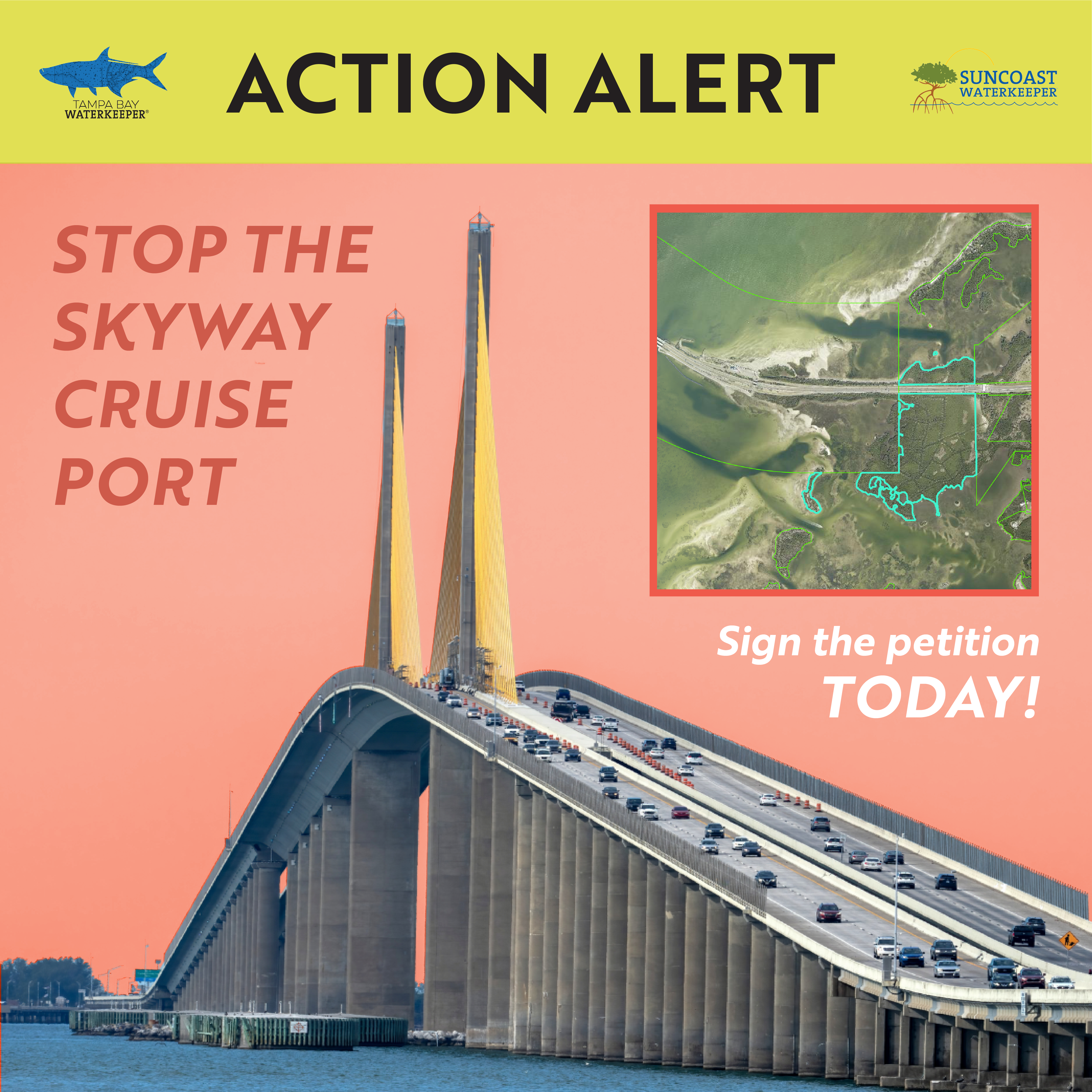
The proposed Knott-Cowen cruise terminal puts the heart of Tampa Bay at risk, threatening the waters, wildlife, and local communities.
READ MORE HERE
SIGN THE PETITION NOW
Let's Fix SB 180
Action Alert from 1000 Friends of Florida
“Last year, the Florida Legislature passed SB 180, a law intended to support hurricane recovery. However, its land-use provisions went far beyond disaster response -- imposing a sweeping, multi-year freeze on local land use and development regulations across large portions of the state.
As a result, local governments have been blocked from updating comprehensive plans, responding to growth pressures, protecting public safety, or implementing voter-approved planning policies -- even when those actions have nothing to do with post-storm rebuilding.
This session, SB 840 offers an opportunity to fix those unintended consequences. While it makes some progress, there's more work to be done to improve the bill. And just as important, members in the House also need to get behind a complete legislative fix to SB 180 before time runs out in the current session.
1000 Friends of Florida is urging lawmakers to support and strengthen SB 840 to:
- Limit planning restrictions to true disaster recovery activities
- Restore local governments' ability to update plans and regulations unrelated to rebuilding
- Preserve appropriate emergency response tools without freezing routine planning
- Reinforce Florida's long-standing commitment to comprehensive planning and public process
Take Action:
*Contact your Florida Senator and urge them to support and strengthen SB 840
*Contact your Florida House member and urge them to take up similar legislation to address the planning impacts of SB 180 before time runs out this session”
TAKE ACTION NOW
Join Pia for an Eyes on the Suncoast Training at REI on February 18th!

Join Pia at REI for a training workshop all about our Eyes on the Suncoast program and how everyday water users can help protect our local waterways. You’ll learn how to spot and report pollution and environmental violations, from illegal mangrove trimming and litter-clogged storm drains to wastewater discharges. Pia will also share updates on our water quality monitoring projects and the many ways you can help us with our work.
This workshop is a great fit for anyone who spends time on the water, whether you’re boating, fishing, paddling, or enjoying other water sports, and want to play an active role in keeping our waters clean and healthy.
Voices for Water is Back March 28th!
Mark your calendars! Voices for Water, our community advocacy program, is back this spring with an in-person session on March 28 (World Water Day!), followed by a virtual session on April 1.
Voices for Water empowers everyday residents to confidently speak up for clean water and conservation. We will break down key water quality issues affecting Manatee County & the City of Bradenton and Sarasota County & the City of Sarasota, and you’ll walk away with clear, accessible materials to help you engage with and share information with local decision-makers.
Whether you’re brand new to advocacy or looking to deepen your impact, this program is a great way to get involved in local policy and create real change for our waterways!
SIGN UP FOR VOICES FOR WATER HERE
Join Us for Our Annual Members Meeting on April 11!
We are thrilled to announce that Suncoast Waterkeeper’s Annual Members Meeting will be held on April 11, 2026 at the Mote Chickee Hut. The evening will include updates from our team on what we have been monitoring and how we are using the information to inform others and act to protect local waters. All the work our members make possible. The Annual Meeting is a time to connect with fellow clean-water champions! After the meeting, we will lead another night paddle to enjoy the waters we love. Stay tuned for details and sign-up information!
|
To get involved, send an email to [email protected]
Like we are doing? Join our clean water mission!
https://www.suncoastwaterkeeper.org/
Author