Is It Safe to Swim? Find Out Here:
The map below shows where we sampled and the up-to-date results of the level of bacteria found in each water sample


What is Enterococci and Why Do We Track It?
Enterococci bacteria normally inhabit the intestinal tract of humans and animals. The presence of enteric bacteria can indicate fecal pollution, which can come from stormwater runoff, pets and wildlife, and human sewage. The Department of Health uses enterococci as key fecal indicator bacteria because they correlate strongly with swimming-associated gastrointestinal illness, especially in marine water. If these bacteria are present in high concentrations in recreational waters, it poses a risk for humans in the water. Scientific studies show that if enterococci bacteria are ingested while swimming, or enter the skin through a cut or sore, they may cause illness or infections.
According to studies conducted by the Environmental Protection Agency, enterococci have a greater correlation with swimming-associated gastrointestinal illness in marine and fresh waters than other bacterial indicator organisms, and are less likely to die off in saltwater. If an enterococci result exceeds 70 cells per 100 milliliters (mL) of marine water sampled, then an Advisory should be issued for the site.
Suncoast Waterkeeper currently monitors 19 sites for enterococci bacteria, and we analyze annual trends in a year-end review which we share to our members, the public, and local officials.
Click HERE to see our latest Suncoast Safe to Swim Summary Review for 2025.
Click HERE to view our 2024 Summary Review.
Our enterococci data is available to the public. Click HERE to view our results from 2022 to 2025..
Suncoast Waterkeeper adopts the same standard operating procedures (SOPs) and National Environmental Laboratory Accreditation Program Certified (NELAC) lab as local government agencies.
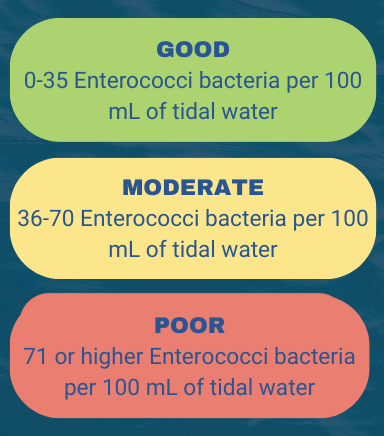
We also use the Florida Department of Health's Healthy Beaches water quality categories to assess swimming safety on the Suncoast, as seen below. A location is considered safe for swimming if it doesn't fall within the "Poor" water quality category. Results of 71 or higher are considered unsafe, as epidemiological studies show a heightened risk of contracting a bacteria-related illness (32 out of every 10,000 swimmers) at this level of water contact.
Every week, we email local and state government agencies with the enterococci results. In a recent effort to reach a wider audience, including state institutions, we began sharing our results in additional databases, like the Watershed Information Network (WIN) of FDEP and the USF Water Atlas Recreational Water Quality Map for Tampa Bay, Sarasota Bay, and the Coastal & Heartland National Estuary Partnership.
Water quality standards are used to determine swimmability, with sites graded annually from A to F based on their percentage of swimmable weeks. The swimmability grade is based on how many weeks each monitored location is considered safe for swimming each year. The percentage of “swimmable” weeks is then calculated and used to determine the grade. Enterococci results between 0 to 70 #/100 mL are considered swimmable, while results greater than 71 #/100 mL are considered unsafe for swimming.
We are concerned about swimmability because our monitored locations are popular for a variety of recreational activities, including swimming, wading, kayaking, fishing, boating, and windsurfing. They are considered Class II or Class III waterbodies and therefore must meet the Florida Department of Environmental Protection's criteria for Enterococci bacteria for their designated use.
How We Monitor
SCWK conducts regular monitoring of bacteria concentrations in 19 recreational sites throughout the Suncoast. In July 2025, we expanded our program to include sites all the way down to Lemon Bay. Our samples are analyzed by the NELAP-certified laboratory called Benchmark EnviroAnalytical in Palmetto. The results are posted weekly on our social media feeds, our Water Reporter map, and the Water Atlas recreational water quality map.
This long-term monitoring project has been possible because of generous grant funding and support from the Mote Scientific Foundation, the Gulf Coast Community Foundation, and the Charles and Margery Barancik Foundation.
We are looking for more recreational sites in southern Sarasota County to monitor. Send an email to [email protected] with your suggested monitoring site, and we’ll get back to you!
Don’t see an area that you would like monitored? For $200 per month, we can add your location to our list of monitoring sites. Get in touch with us at [email protected].
Donate
-
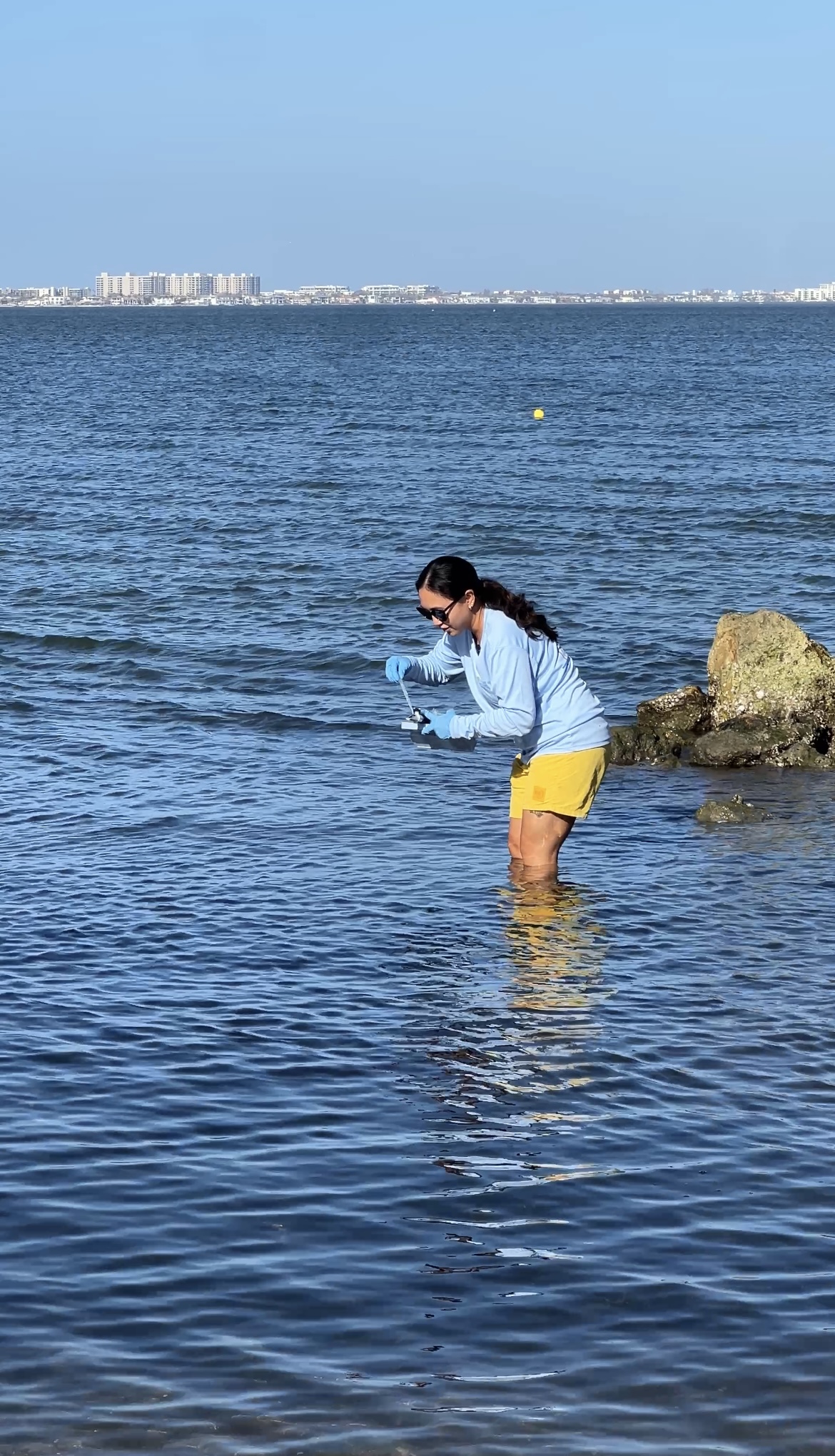
Collection of Samples
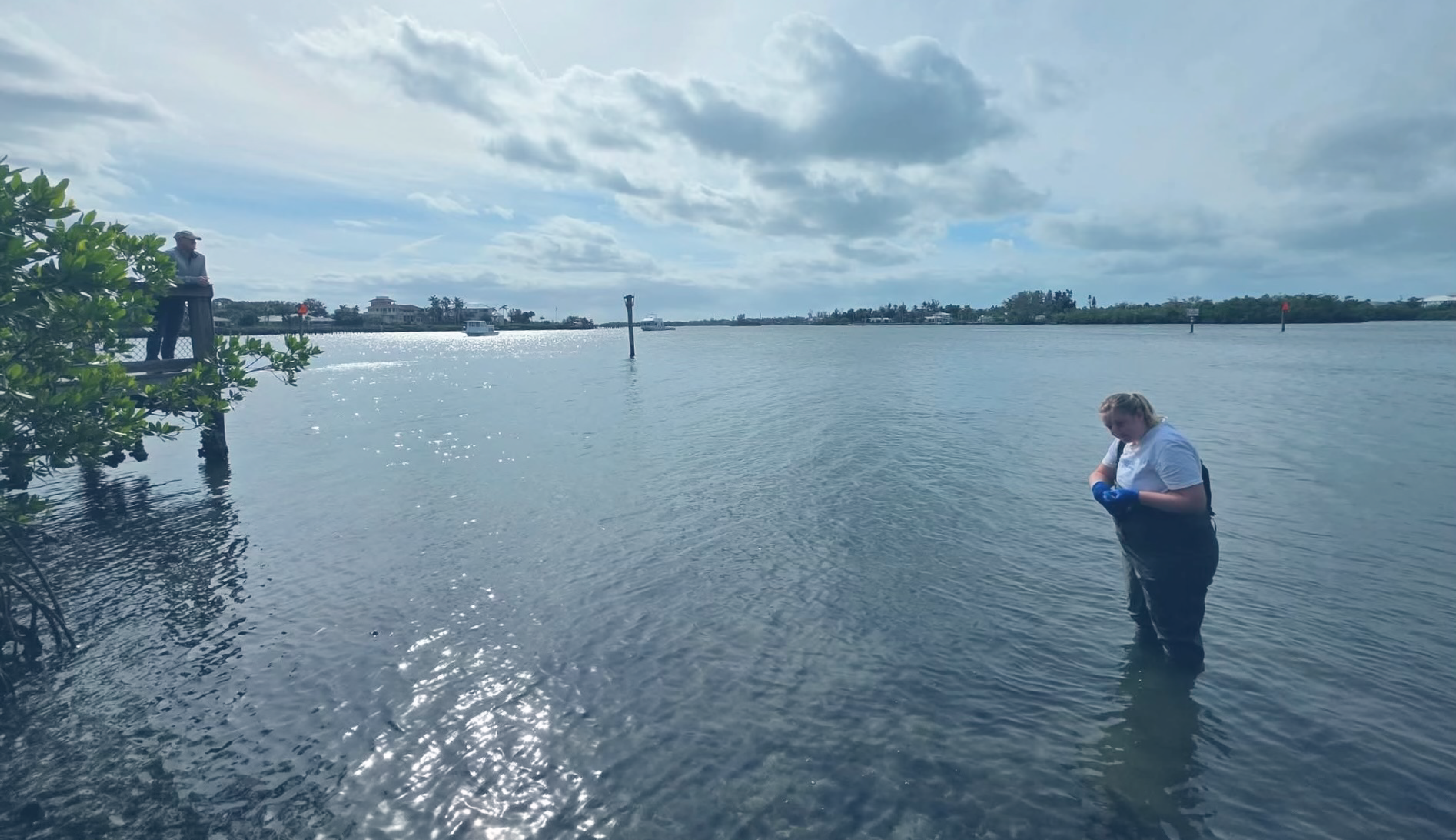
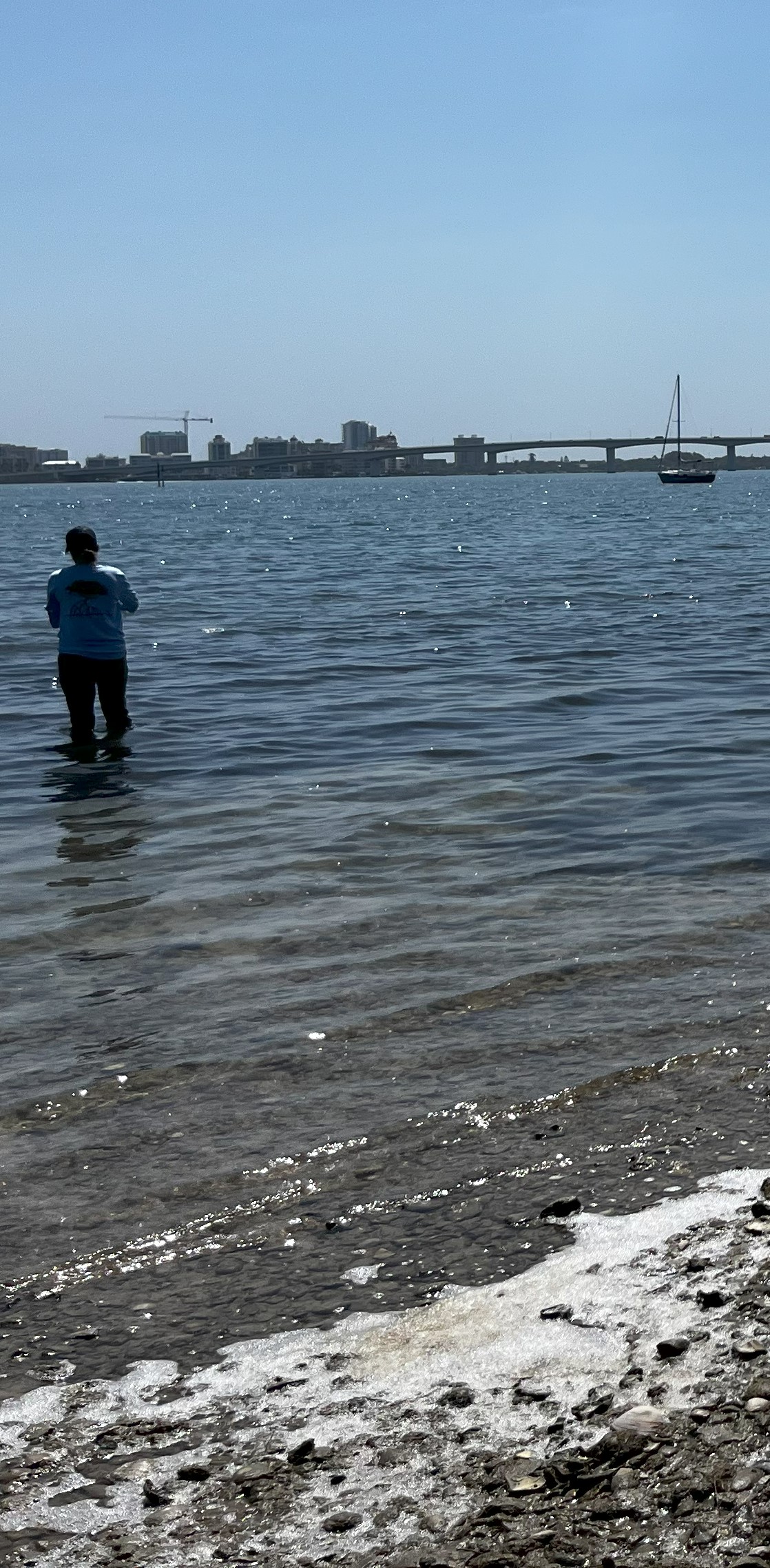
We have two Water Quality & Pollution Specialists who are in the field every week. Water samples are collected using aseptic techniques to avoid contamination and tampering. They also take note of the environmental conditions, such as wind velocity, tidal stage and height, rainfall in the past 24 hours, salinity, water pH, and the presence of decaying vegetation (“wrack”) in the sampling area. We are in the process of adopting the Environmental Protection Agency’s (EPA) checklist to evaluate the potential pollution sources at each site. It is important that we evaluate the bacterial sources on a case-by-case basis, because each location and waterbody has a unique set of inputs. The potential bacterial sources we typically look out for include wildlife that can be a source of fecal bacteria, like dogs, birds, and horses, flowing stormwater pipes, sewage spills or bypasses, and unregulated mooring boats. -
Lab Examination
The collected water samples are processed by Benchmark EnviroAnalytical to quantify the Enterococci bacteria in each 100 milliliter (mL) water sample. This testing process takes approximately 48 hours to complete.
-
Results & Updates
Once the laboratory methods and reports are completed, they will send us the results back. We post the results on our Facebook and Instagram pages every Friday. This allows followers to stay updated and informed about water quality conditions in their area. We also email our local stakeholders, which includes staff from Manatee County, Sarasota County, the Florida Department of Health, other non-profit organizations, and media outlets, with the weekly report.