April 2026 Newsletter

|
MONITOR
How Drought Impacts Water Quality
If you have been checking our weekly enterococci monitoring results, you may have noticed a trend. Most of our sites have been green, or “safe to swim,” with bacteria levels between 0 and 35 enterococci per 100 mL of tidal water. At first glance, this is good news. Clear water and low bacteria levels mean safer conditions for swimming, fishing, and enjoying time on the water. But the reason behind it is more complicated.
We are in a drought.
In March 2026, the Southwest Florida Water Management District Governing Board declared a Modified Phase III “Extreme” Water Shortage due to ongoing drought conditions. The lack of rainfall is directly shaping what we are seeing in local waterways.
Drought affects water quality in several ways. One of the most immediate is the reduction of stormwater runoff. Stormwater carries an estimated average 60% of the pollution that enters our bays and waterways. When there’s little rain, there’s little stormwater. With less runoff moving pollutants into the water, clarity improves. The result is what many are seeing now: cleaner-looking water and lower bacteria counts. However, that clarity is revealing deeper issues.
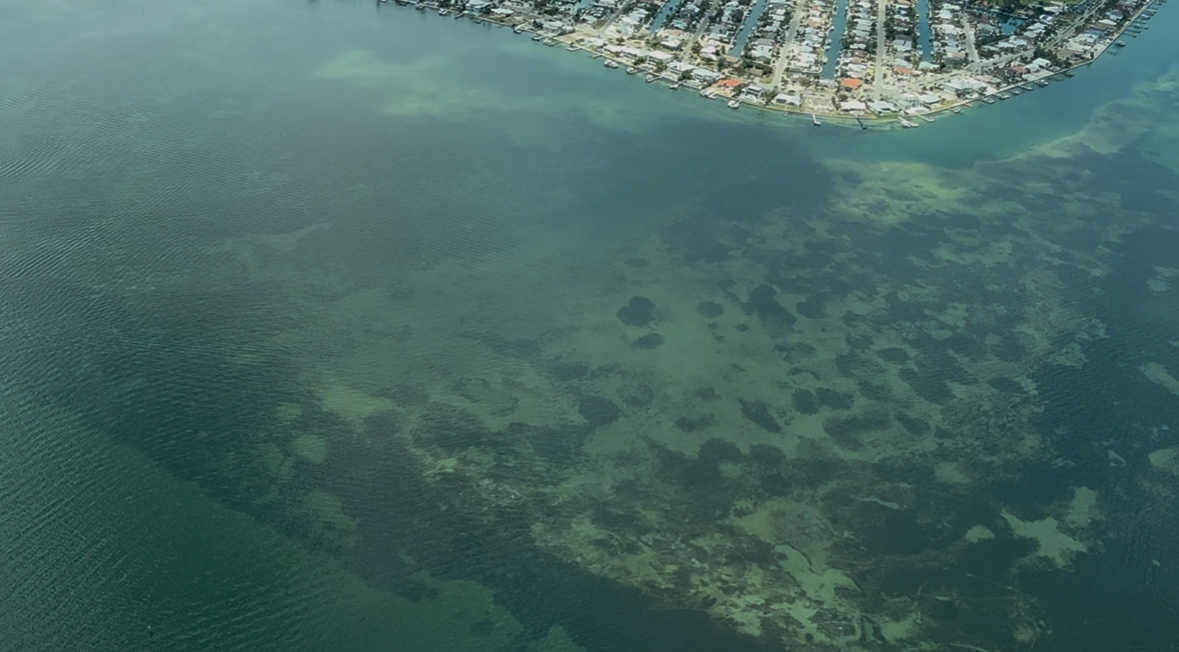
With improved visibility, it becomes easier to see long-term environmental changes in our underwater ecosystems. Recent aerial footage over Key Royale shows scattered patches of seagrass where thick, continuous beds once existed. The images highlight the extent of seagrass loss in the area and reinforce concerns raised in past monitoring and research (see our December 2025 newsletter for more).


Photos by Captain Scott Moore
Clearer water may feel like a win, but it is important to understand what it represents. It shows us a glimpse of what local waterways could look like. It highlights just how much pollution is normally carried into the water during rain events and points to a larger issue: stormwater management. Without strong systems in place, pollutants will continue to wash into our bays and rivers when the rains return. That's why Suncoast Waterkeeper has listed stormwater as a local policy priority under our Voices for Water program, where volunteers meet one-on-one with elected officials to discuss local water quality issues. Manatee County, for example, still does not have a dedicated stormwater fee, putting it behind other municipalities that have invested in long-term infrastructure and maintenance.
This drought will not last forever. In Florida, heavy rains and storm seasons always return. When they do, the pollutants that have built up on land will be washed back into the water, often all at once. For now, the Suncoast is seeing clearer water. The challenge is making sure that we can enjoy crystal clear waters throughout the year.
INFORM
Dust, Heat, and Drinking Water: Environmental Ambassadors Raise Concerns at Booker High

In between exams, college applications, and end-of-year assignments, the Environmental Ambassadors of Booker High School stood before a conference room screen ready to present their findings to an audience of assistant principals, Sarasota County School Board members, and community partners.
“In order to achieve, we need to breathe,” one student said, grounding the presentation in a simple, but urgent truth. Directly across the street, piles of crushed concrete loom over the student parking lot, baseball field, bus circle and more. It’s a daily reality for students, and one that shaped much of the group’s work this year.
Now in its third year, the Environmental Ambassadors program has focused on student-led research and actions. Over the past several months, students conducted experiments on air quality and drinking water, while also researching the impacts of extreme heat on campus. After completing their data collection in December and January, they analyzed their findings and developed recommendations aimed at improving conditions at their school.
 Action Items requested by the students at the end of their presentation
Beyond the data, the students’ presentation highlighted a critical lesson: lived experience matters. While testing showed that the school’s drinking water met state secondary standards, students noted that the taste and quality still discourage use. A survey sent out by the Environmental Ambassadors to fellow classmates showed this issue extended beyond the students in the club. Most come to school with reusable bottles filled with their water supply for the day and opt not to refill at fountains unless there is a dire need. During the presentation, even teachers nodded in agreement, indicating they avoid the fountains as well. So, even though the drinking water sits within state standards, a problem still remains that needs to be addressed.
Air quality results told a similar story. Even within the limited scope of their experiment, students recorded AQI levels ranging from moderate to unhealthy for sensitive groups. A more extensive, month-long study is now underway in partnership with a lab at the University of California, Davis, to further analyze particulate matter in the air. Students emphasized that installing monitors would be a first step, not a complete solution, to addressing a broader community issue. When it comes to heat, more awareness and better preparation are needed to protect both students and staff from heat-related illness.
The students acknowledge their recommendations are not a complete fix. Their efforts this year reflect a commitment to making tangible improvements, even in situations with complex challenges. Remember, these are high school students balancing coursework, exams, jobs, and extracurriculars and still, they found the time to ask questions, gather data, and ask for change. These remarkable students offer an important, simple reminder for all of us who want to improve the environment for ourselves and future generations: you can always work to make things better.

ACT
Giving Challenge Thank You!


Thank you for showing up in every way possible. Whether you donated, shared our mission with friends and family, stopped by to see us at The Bay, or stuck with us through a flurry of emails and messages, it all made a difference.
This year, we put extra energy into building momentum for the Giving Challenge, including trying out new ways to connect like our texting feature. We know some messages may have landed at less-than-ideal times, and we’re already working on ways to keep communication more streamlined and respectful of your time. We appreciate your patience as we continue to improve.
The momentum doesn't stop here! These funds will help monitor our water quality along the Suncoast, inform our community through engagement programs and act for stronger environmental protections. While funding keeps our work moving, it’s collective action that truly drives change!
|
Calling All Dock-Owners: Help Us Keep Monitoring!

Here's the thing: Every day this boat is out on the water is a day we're collecting critical data, spotting problems before they get worse, and protecting the waters you love.
Can you help? Do you have dock space available, or know someone who might be willing to share? We'd love to chat about making this work!
Any leads? Contact Shelby Isaacson, Development & Volunteer Coordinator ([email protected])
For a Full Listing of Our Events and Ways to Act, Visit Our Events Page.
Braden River Cleanup THIS Saturday!
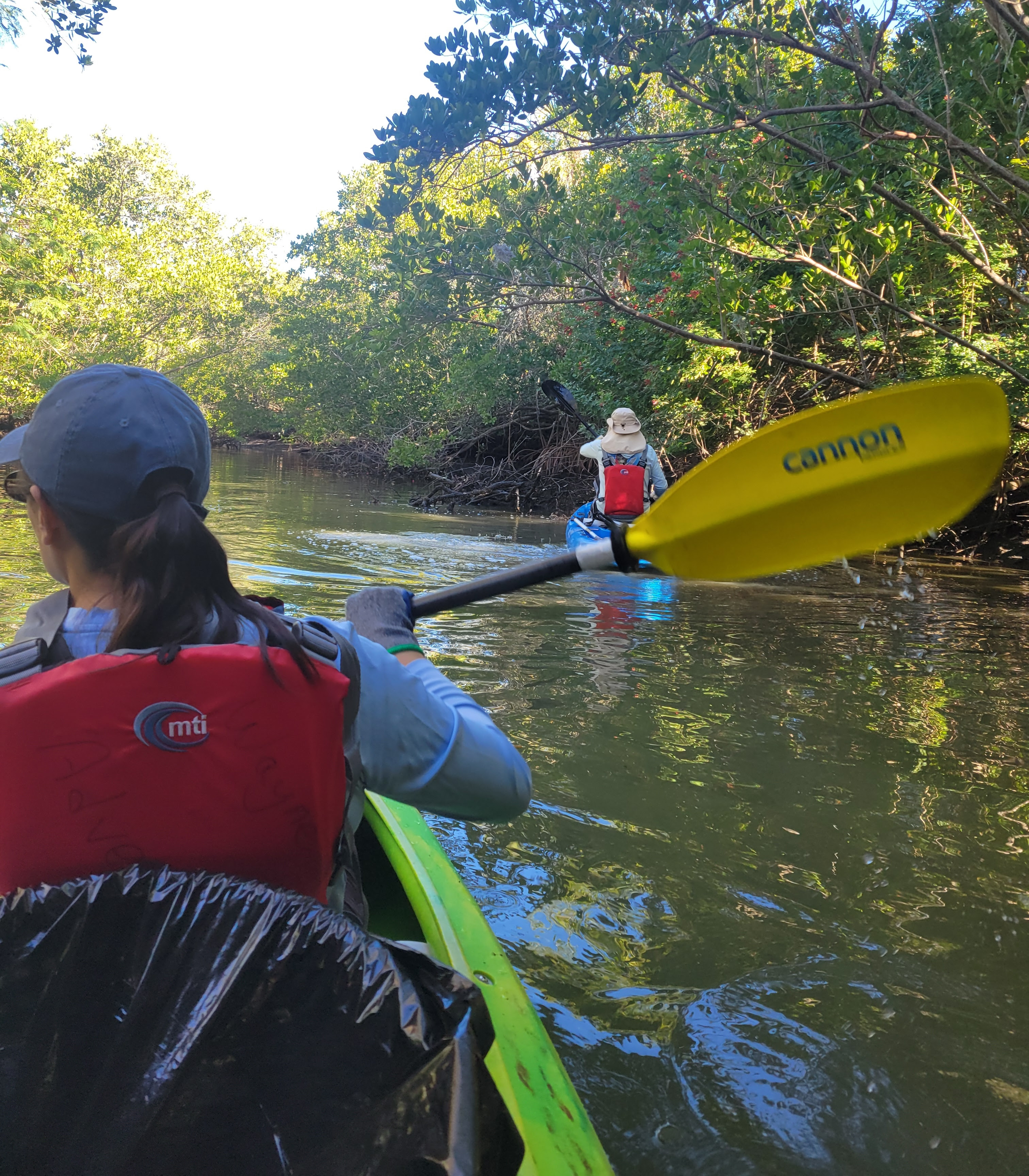
There's still time to sign up! Roll up your sleeves and help remove trash before it reaches our bays and Gulf waters. Cleanups are one of the most direct ways to protect wildlife, improve water quality, and see the difference you make immediately. We'll be at the Honi Hanta Girl Scout Camp in Bradenton working with other volunteers to remove waterside trash from the mangrove islands on the river.
WHEN
Saturday, May 2, 8:30 - 11:30 am
WHERE
Honi Hanta Girl Scout Camp
4825 51st Street East
Bradenton, FL 34203
NEEDED
Kayakers and shoreline helpers
Complimentary lunch for volunteers! Wear protective clothing and shoes. We will be providing gloves and collection supplies, but feel free to bring your own!
|
Mangrove Rangers 2026 Training

Step into one of Florida’s most powerful coastal ecosystems. This hands-on program focuses on mangrove mapping and protection for the third year running. Work with a group of volunteers to perform critical drone mapping of our most valuable, and most vulnerable mangroves.
TRAINING SESSIONS
1760 Mound St, Sarasota, FL 34236
- Sunday, May 3, 1 - 3 pm
- Wednesday, May 6, 6 - 7:30 pm
|
To get involved, send an email to [email protected]
Like we are doing? Join our clean water mission!
https://www.suncoastwaterkeeper.org/
Author