Interview with Dr. Jody Harwood

Following the Questions: Dr. Jody Harwood on Water Quality, Serendipity and Protecting Florida’s Natural Beauty
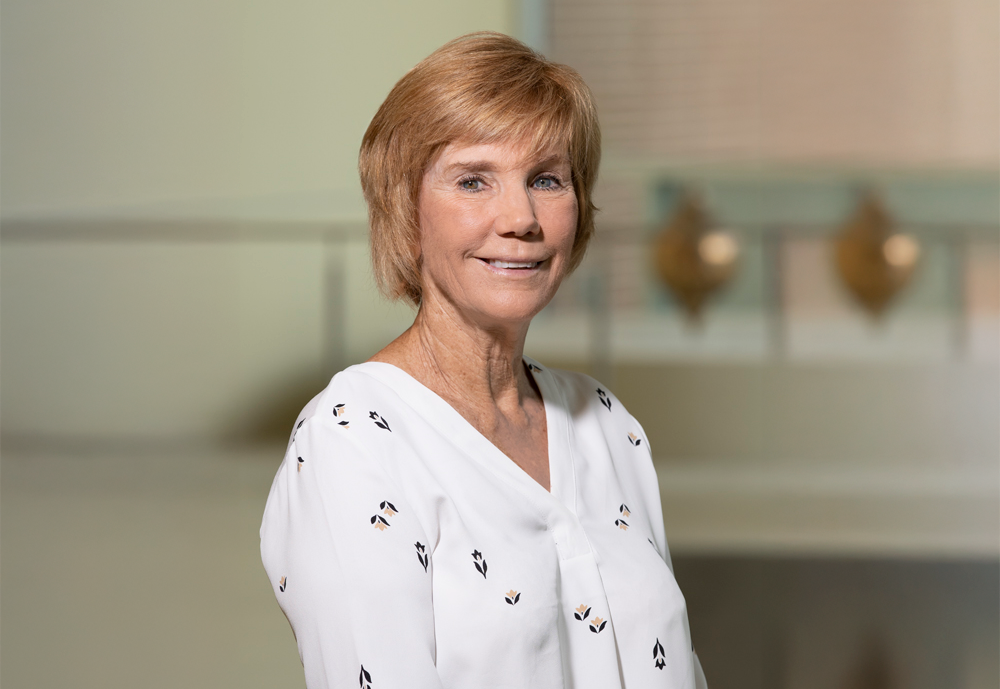
Photo by Corey Lepak
This month, Suncoast Waterkeeper launched Microbial Source Tracking (MST) at Longboat Key in partnership with Dr. Jody Harwood’s lab at the University of South Florida. In recognition of Women’s History Month, we had the opportunity to sit down with Dr. Harwood to discuss the science behind this work and the journey that led her there. In this conversation, Dr. Harwood reflects on the unexpected path that led her to microbial ecology, the role of curiosity in shaping her career, and why protecting Florida’s waters is more urgent than ever.
Interviewer: How would you describe your work in your own words?
Dr. Jody Harwood (JH): I would say that I'm a microbiologist and I work on water quality in terms of the microorganisms that are in it. I look at their ecology, and I'm interested in how they make a living in water. I'm particularly interested in viruses and bacteria that don't really belong in the water, ones that really have evolved to live in the gastrointestinal tract. What do they do when they get out in the water and how many of them survive? Why do they survive? And then how can we use them to inform us about the status of the water and where pollution is coming from?
Interviewer: You had quite a roundabout way of coming into microbial ecology. What made you want to switch career paths?
JH: That's something I always enjoy talking about because I like emphasizing the serendipity of my career. I think some people think that a career is something you decide upon early and then just stick to. But I find, in reality, there's a lot of serendipity in life. So I wanted to be a veterinarian, but in my second bachelor's degree for biology, I had a professor, Vladimir Munk and took my first microbiology course. I was completely fascinated by the idea that these tiny organisms could both kill people, animals, and plants, and that they really ran the earth and all its processes. That was mind-blowing to me.
Interviewer: What's something surprising about Florida bacteria and Florida waters that still surprises you today?
JH: Bacteria that are shed in feces and can enter the water from various contamination routes grow in the gastrointestinal tract of humans and various other animals, and yet, some of them survive really well out in the environment. We still don't have a great understanding of the genetics that allow some of these bacteria to survive. Let's just take E. coli, for example. It's a major component of your gut flora, and some strains are pathogens, while others are “naturalized”. They are able to survive and proliferate in the environment. So, we don't really understand which ones are able to do that or why. And so that's going to be an area of ongoing research in the next several decades.
Interviewer: What's something that you wish people understood better about water quality?
JH: One thing that I wish they understood, and it's linked to the second thing I'm going to say, is that almost all water that we experience on Earth is billions of years old. It was literally formed as the solar system was forming, or even before it formed. So water is precious. A very small amount is made through events that occur in modern times. So it's a very finite resource. A lot of people don't understand that.
Then that is linked to my second wish, which is that people understand that all of their activities, everything they do, impacts water quality and water availability. We're really fortunate in the US that we have ample clean water supplies. We won't always have them if we keep abusing it. So I really wish that people would think about applying fertilizers or making parking lots. Paving is one of the worst things you can do to water quality. So I just wish that we could really convey that aspect of what we do impacts this precious resource, and it is a precious resource.
Interviewer: What is a lesson that you've learned from a student or set of students that you've never forgotten? This could be something about your work and research, but also just in general.
JH: In general, I think that the thing that I've learned from my students is to consider mental health a lot more. I've been fortunate that I have a pretty strong constitution. Everybody gets anxious, but I don't have a lot of things to deal with in my day-to-day mental capacity of getting along in the world. I've had a lot of graduate students who I really had to think about how to help them with challenges. That was one lesson I learned over time: to think about mental health as well as ability. Because there can be a ton of ability in a given individual. Their mental health or some sort of challenge could prevent them from achieving that. So how do I help them? That was very important to me and it evolved over time because when I first started I was like, “oh, everybody's like me”, you know.
Then in my research, there was one occasion when students brought something to me that changed everything. At the very beginning of my career when I was at University of North Florida in Jacksonville. An undergraduate came to me and she said, Oh, I'm working with Duval County and the City of Jacksonville and they want to know how to tell where the fecal coliforms are coming from in the river. And I was like, “well, there's no way to do that. They can come from any number of varieties of different people.” And she said, well, I found this paper. She showed me a paper, which was written by Bruce Wiggins. And I was like, wow, you can use antibiotic resistance patterns to tell where they came from? That launched my whole microbial source tracking career. She showed me that and I started working with the city. And that's where the whole thing took off.
I saw the potential in it and I thought this is worth exploring. I was working on other things at the time, I wasn’t doing anything like that. But luckily, I had a little bit of some water quality experience from back when I was a graduate student. So I was like, Oh, I know how to do this work, let's play with it. That was very fortunate. That's why I always tell my students to learn everything you can. Learn all the different techniques, even if you don't think you'll use that, you never know when something's going to come in handy.
Interviewer: So you have lived in Florida for a long time. What do you love most about it? What is a favorite local or regional nature spot that you have here?
JH: So Florida…I'll probably get a little bit emotional here…I'm a nature lover at heart and as you know, I love water. I love the birds and animals. I just like to go down by a river and Hillsborough River is beautiful. The northern parts are still pretty natural. I love the tangled vegetation and the brown water. It's just really unique. I get emotional because we see it going away.
I think about Dade City. I have a couple horses there and the changes there have been so profound and you know, it just makes me want to cry. Sometimes I do when I just see, oh, yeah, there's another giant apartment building. Oh, there's another sprawling subdivision in those beautiful hills, you know, where I know there are Sandhill cranes and fox squirrels and gopher tortoises. It's just heartbreaking. It really is. And the coastal regions have their own issues.
Interviewer: Evidence-based research is not always the most glamorous. Sometimes people who aren't really in it can also find it to be a bit tedious and not quite necessary. What keeps you motivated to keep doing the research that you're doing in spite of everything?
JH: To me, getting new data is like opening a present because you don't know what it is until you get it from the instrument or until you look at it on the spreadsheet or until your graduate student comes and tells you about it. Sometimes it's so surprising. You just go, “huh.” And then you have to step back and think about it.
For people who see this and they say like, “oh, she's just a science geek,” I mean, I grew up in the humanities. I was not trained that way and somehow I stumbled into my love of data. And so I just think it's the most fun. You don't know until you start the analysis. You look at it you go, “what is it going to tell me?” And then it tells you something. And then that leads you to another question. It's like, “oh, what am I going to ask now?” Do I have to backtrack and think more about my hypothesis or does this move me ahead? So I guess it's like a present and then subsequently it becomes a road and not always a straight road, it might even loop back on itself. It might take you back to a previous place where you were.
Interviewer: It's a practice in enjoying uncertainty.
JH: I have always said that to be a research scientist, you have to have a high tolerance for ambiguity. If I had a catchphrase, that would be it. And I always tell my students: Don't expect to know what you know and never be challenged on it because your data will challenge you and if you don't listen to your data, then you will miss the opportunities. When your data say something that you didn't expect, that's your opportunity.
Author