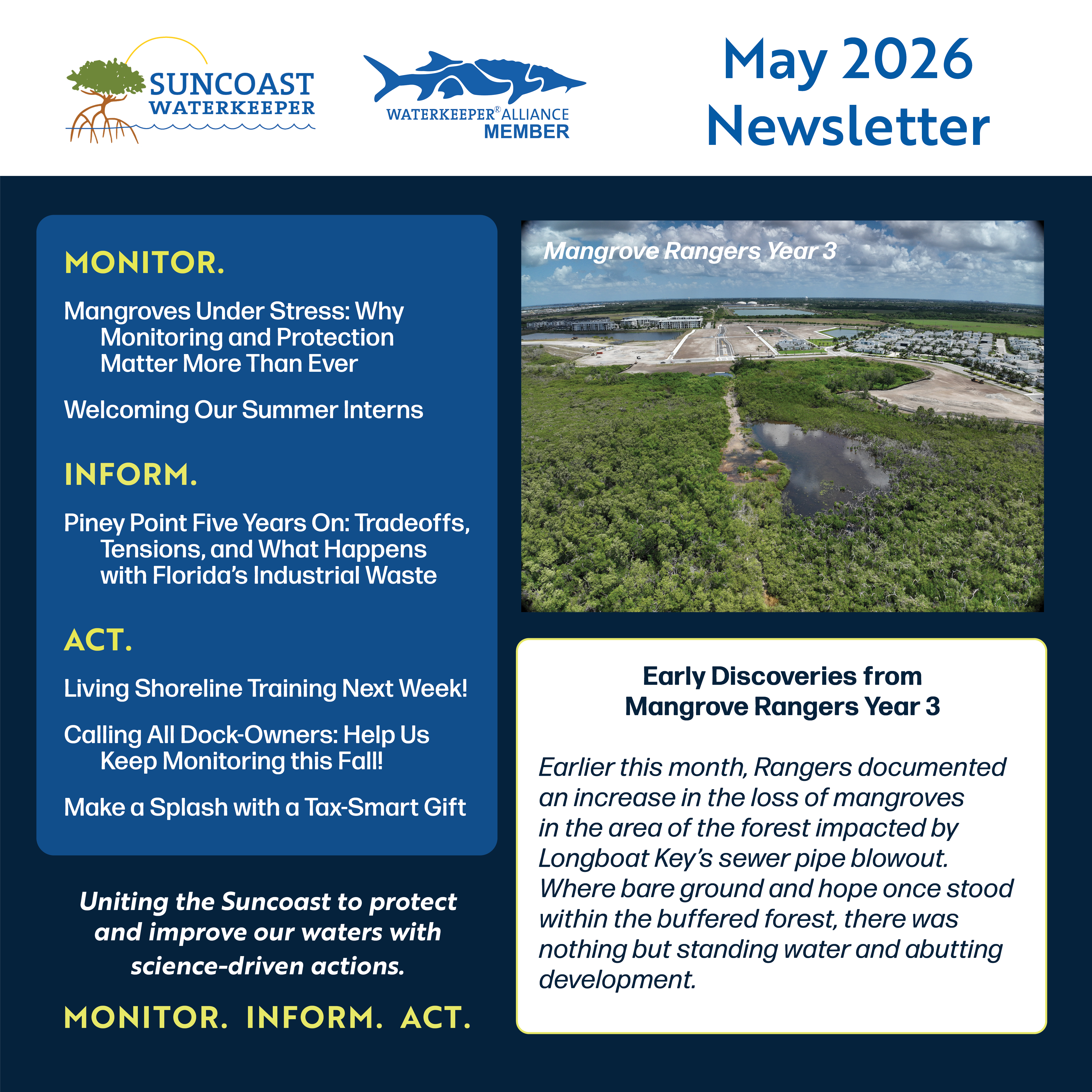
May 2026 Newsletter
|
MONITOR
Mangroves Under Stress: Why Monitoring and Protection Matter More Than Ever
Across Florida’s Gulf Coast, scientists, restoration practitioners, and local community leaders are documenting an alarming trend: widespread mangrove stress and die-off, often referred to as a “mangrove heart attack.”
What Is a Mangrove “Heart Attack”?
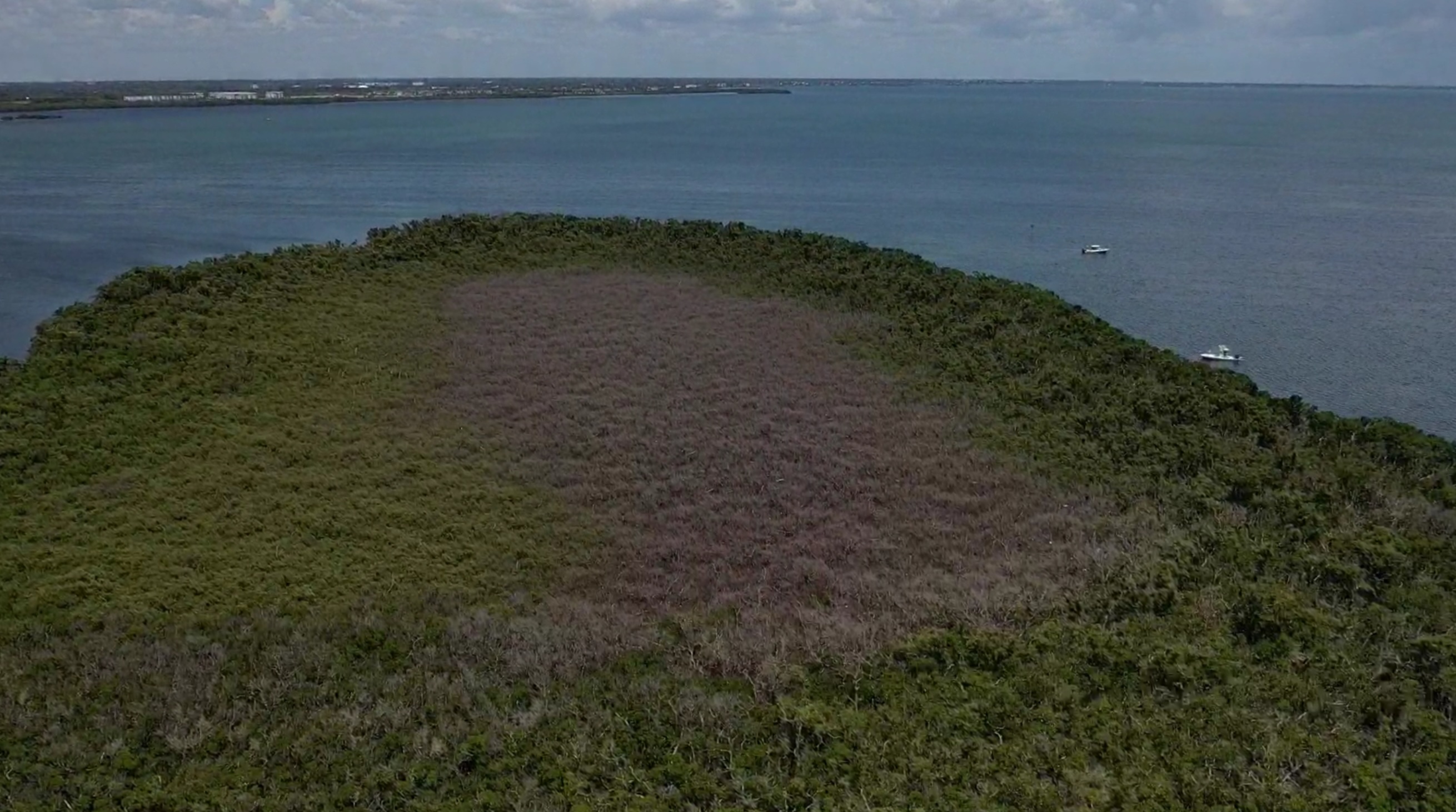
Mangrove heart attack is when a portion of the interior mangrove forest, the heart, dies, leaving a rim of otherwise healthy trees. The major cause of mangrove stress experiencing a heart attack, is altered tidal water flow and exchange, much like blocked blood flow to the heart. On the Suncoast, the trees most impacted by heart attack are black mangroves.
Mangroves survive in challenging coastal environments because their specialized root systems allow them to exchange oxygen above the waterline.
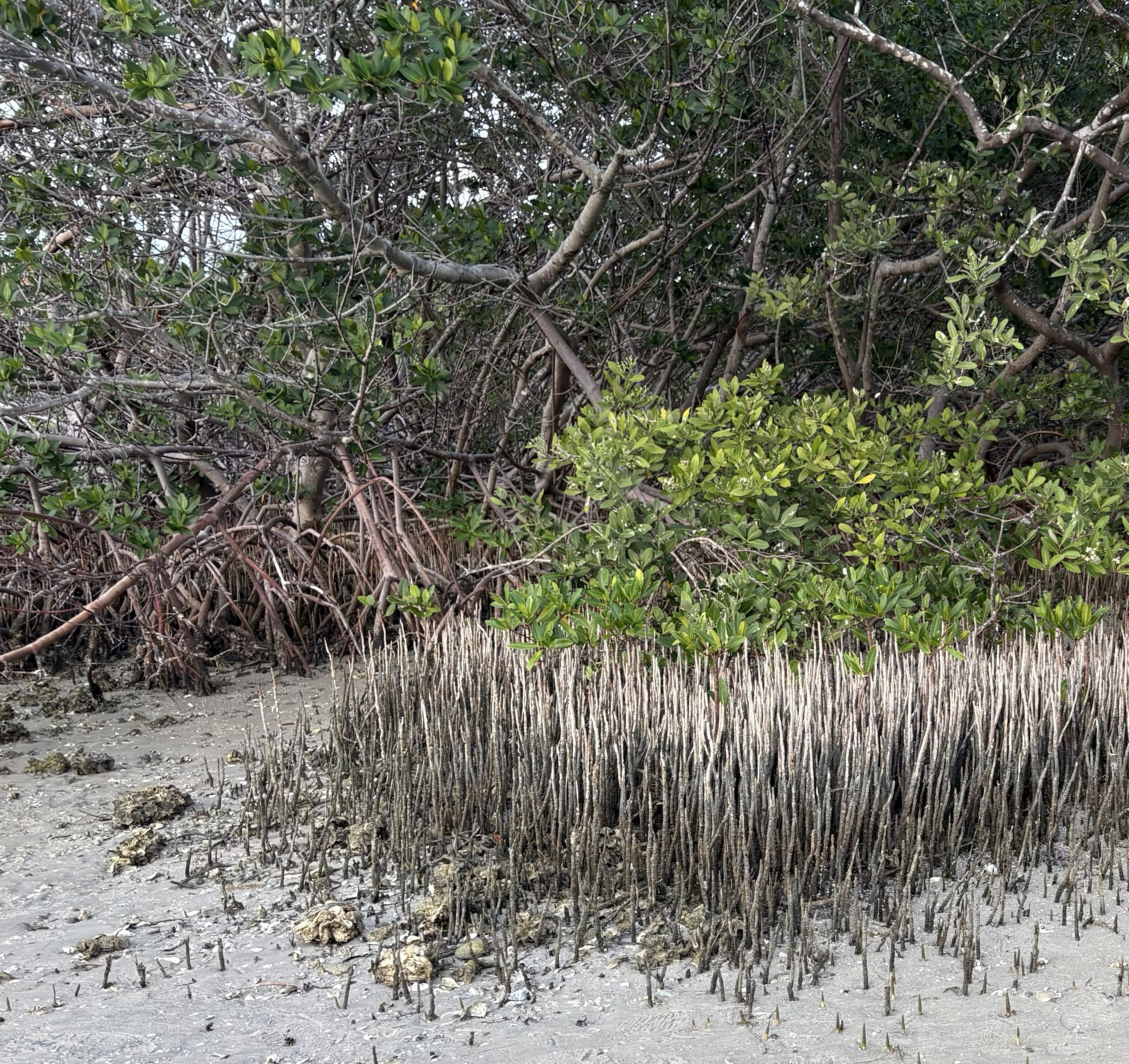
The image above illustrates the distinctive prop roots of the red mangrove (left) and the aerial roots, or pneumatophores, of the black mangrove (right). These specialized root systems are unique adaptations that allow mangroves to survive in oxygen-poor, unstable coastal soils. Both contain tiny pores called lenticels, which enable the trees to exchange oxygen with the atmosphere and supply air to their underground root systems in these wet environments.
However, when storm surge, blocked tidal flow, sea-level rise, or excessive sediment burial prevent these roots from exchanging oxygen for too long, they can begin to die. At the same time, stagnant conditions can cause toxic hydrogen sulfide to build up in soils, ultimately stressing or killing mangroves. Adding to these challenges, the natural decomposition of mangrove leaves and twigs produces acids that can gradually dissolve the underlying limestone that supports the forest. Over time, this process may contribute to sinking or subsidence within mangrove habitats. Combined with storm impacts, sea-level rise, altered hydrology, and sediment burial, these processes highlight the many natural pressures facing these critically important coastal ecosystems.
Human pressures make the situation worse. Hydrologic barriers such as roads, berms, or altered drainage patterns exacerbate the problem by preventing water from flowing naturally. Trimming, shoreline hardening (seawalls), habitat fragmentation, and loss of coastal migration corridors (large upland buffer zones where mangroves could retreat from rising seas) all reduce mangrove resilience over time.
Recent storms, including Hurricanes Ian, Helene, and Milton, have amplified these impacts across Florida’s Gulf Coast. Researchers in southwest Florida documented delayed mangrove mortality for months and even years after Hurricane Ian, due to prolonged inundation and storm-deposited sediment that buried sensitive root structures.
The Mangrove Rangers Program
Suncoast Waterkeeper’s Mangrove Rangers program was launched to help fill critical monitoring gaps while building public engagement around mangrove conservation. In 2025, Mangrove Rangers documented hurricane-related canopy loss and expanding areas of stressed mangroves in several locations across the region.
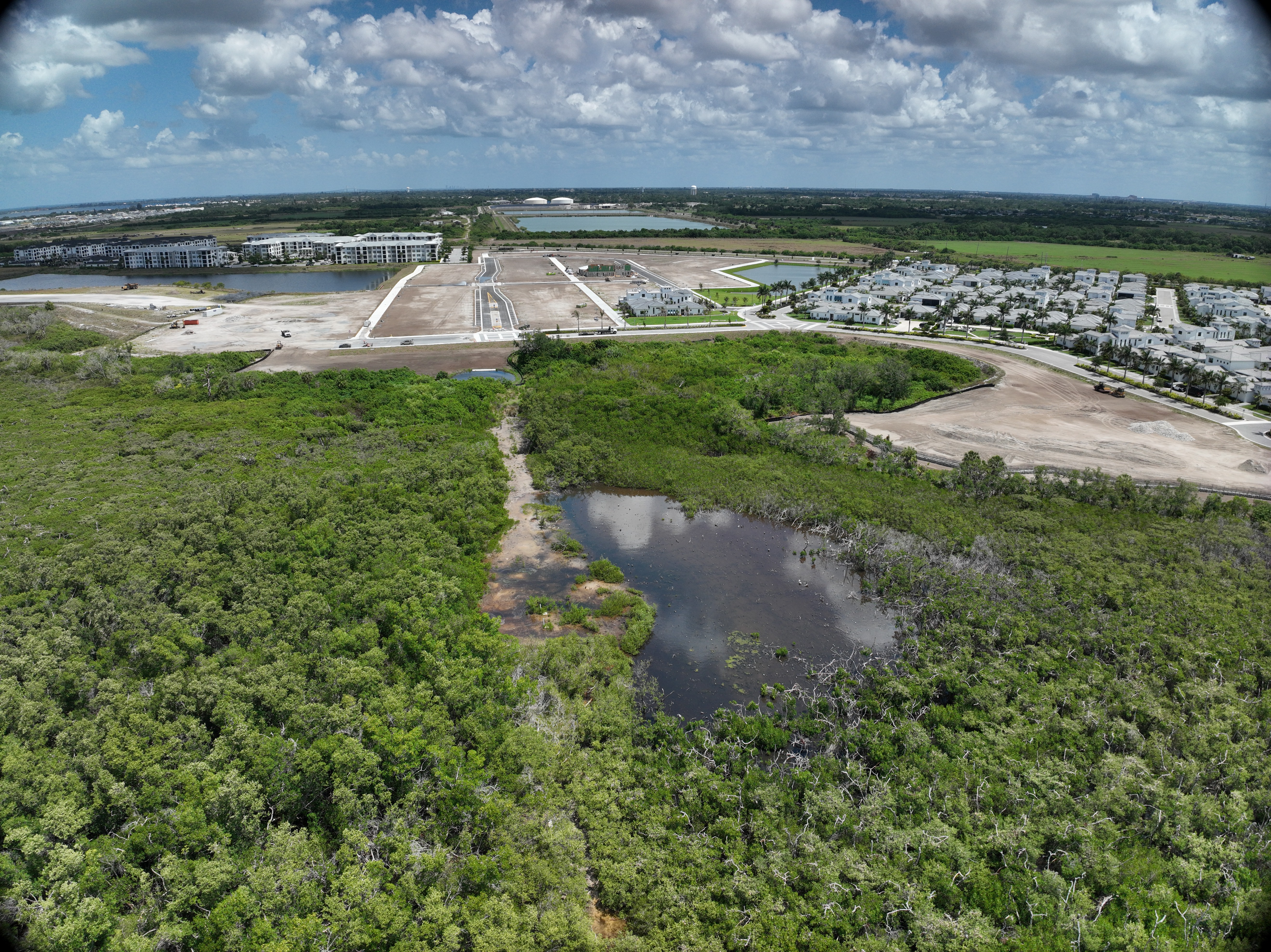
Earlier this month, Rangers documented an increase in the loss of mangroves in the area of the forest impacted by Longboat Key’s sewer pipe blowout. Where bare ground and hope once stood within the buffered forest, there was nothing but standing water and abutting development.
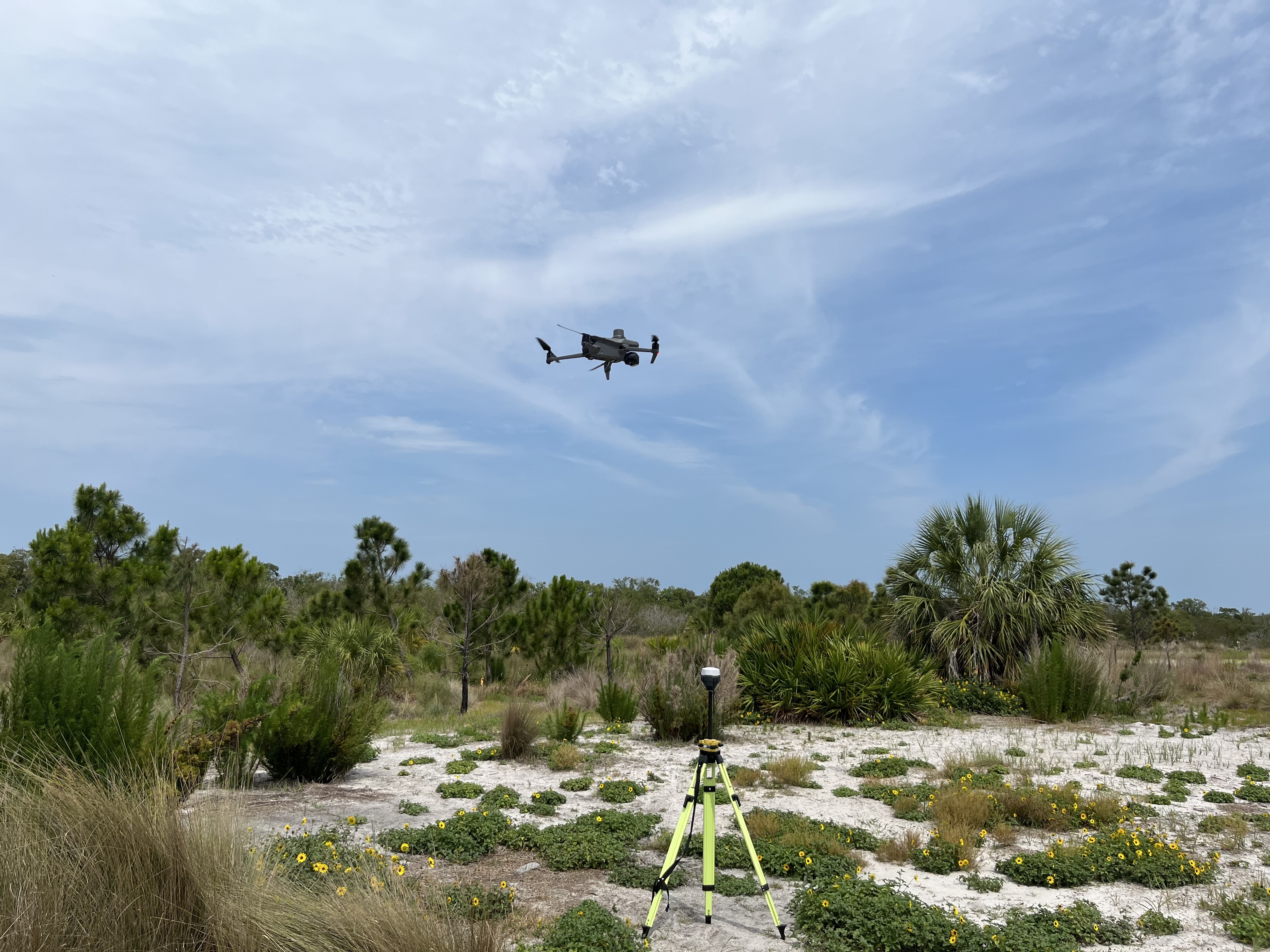
Adding to the discovery of loss were recent aerial surveys of the Sister Keys, which revealed extensive areas of mangrove decline, raising concerns about the scale and urgency of the problem.
Importantly, monitoring is only the first step.
A Call for Conservation and Awareness
There is a growing consensus among scientists and restoration practitioners that mangrove conservation must become a higher regional priority.
Many impacted areas may recover naturally if tidal flow and drainage are restored. Other areas may require active restoration or long-term adaptation planning as climate impacts intensify. Continued monitoring will be critical to understanding where recovery is occurring, where intervention may be needed, the success of interventions, and how future storms will shape these ecosystems.
Partnering with Manatee County’s Natural Resources Department, we are beginning to do just that. We are tracking the government’s restoration efforts at Perico Preserve in the hope of seeing the system recover, thanks to the staff’s commitment to conservation and unique approach. We hope this year’s survey will indicate a positive trend that will serve as a launch pad for future restoration projects.
Suncoast Waterkeeper is committed to continuing this work through science-driven actions and public education, community engagement, and advocacy for stronger protections. We aim to enhance the community’s focus and commitment to protecting mangroves.
Mangroves are not simply trees along the shoreline. They are living infrastructure that protects our communities, supports our fisheries, stores our carbon, improves our water quality, and strengthens the resilience of our coastlines.
Protecting them is essential to protecting the future of the Suncoast.
Our Mangrove Rangers program is made possible through generous funding from the Charles and Margery Barancik Foundation.
We would like to express our deep gratitude for their continued support!
Welcoming Our Summer Interns
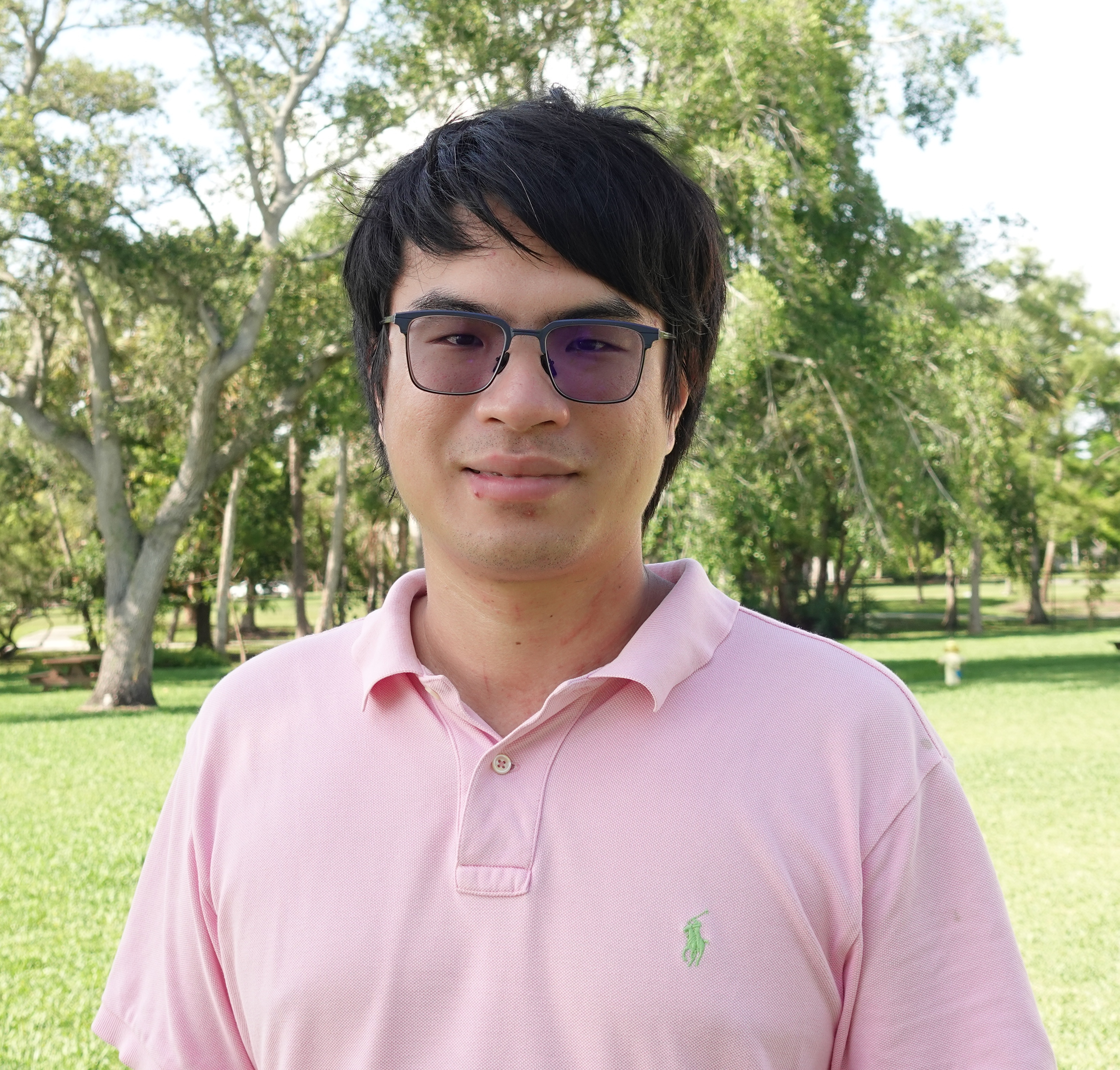
Peter Yeh, Data Science Intern
Combining his background in geography and data science, Peter is passionate about applying technical solutions to environmental conservation. At Suncoast Waterkeeper, his work focuses on supporting the Mangrove Ranger program by processing and analyzing geospatial imagery data to monitor local coastal ecosystems.
Peter holds a B.S. in Geography from National Taiwan University and is currently pursuing an M.S. in Applied Data Science at New College of Florida. As an approved sailboat skipper, he has a deep personal connection to the water. Peter is dedicated to leveraging his technical toolkit, including Python, R, and spatial analytics to help protect our local waters.
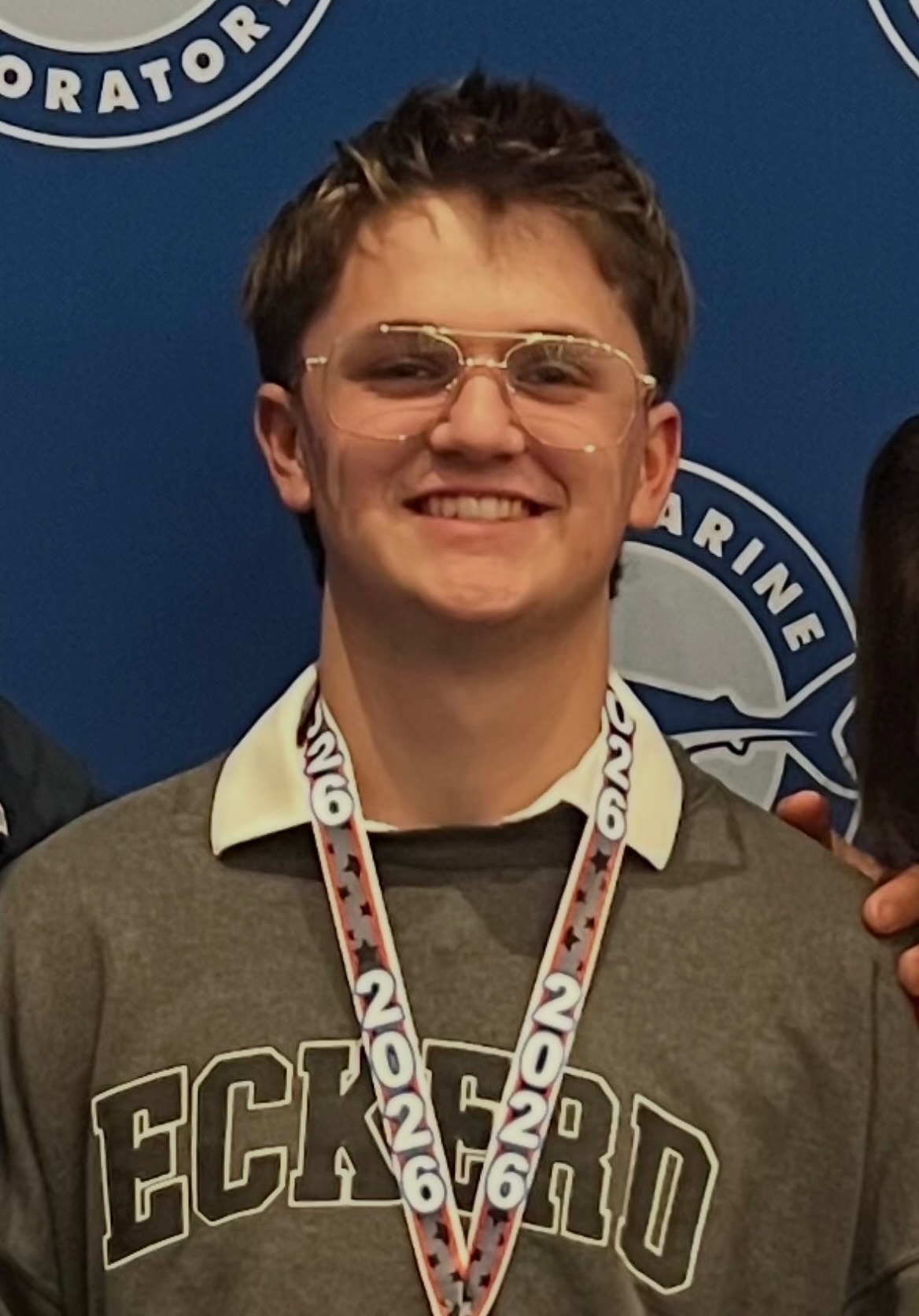
Tripp Isaacson, Environmental Quality Intern
Tripp is a Florida native, born in St. Petersburg and raised in Sarasota. He has recently graduated from Sarasota High School and is attending Eckerd College in the fall where he plans to study marine biology and minor in environmental film. In recent years, Tripp has studied Karena brevis (aka red tide), coral, and even created his own renewable lubricant out of an invasive species. In his free time, you can find Tripp fishing, skimboarding, working on boats, or restoring his 1987 RX-7 FC.
INFORM
Piney Point Five Years On: Tradeoffs, Tensions and What Happens with Florida's Industrial Waste
For our May newsletter, Suncoast Waterkeeper spoke with four people closely connected to Piney Point about their key takeaways from the disaster and the five years since: Maya Burke, Assistant Director of the Tampa Bay Estuary Program; Justin Bloom, environmental attorney, founder, and board member of Suncoast Waterkeeper; Justin Tramble, Executive Director of Tampa Bay Waterkeeper; and Rob Brown, former Manatee County employee, current Manatee County Planning Commission board member, and Suncoast Waterkeeper board member. The conversations revealed a complex story rooted in decades of regulatory failures, difficult tradeoffs, and lingering questions about how Florida manages industrial waste long after plants shut down.
—
It has been five years since more than 200 million gallons of nutrient-rich wastewater were released from the former Piney Point phosphate plant into Tampa Bay. For many outside the region, Piney Point can feel frozen in time: a singular environmental disaster marked by headlines, fish kills, and emergency declarations in the spring of 2021. For those of us who call this watershed home, it is a living reality with impacts that continue to unfold to this day.
For Maya Burke, Assistant Director of the Tampa Bay Estuary Program, Piney Point reinforced what scientists have long understood about Tampa Bay’s vulnerability to nutrient pollution. “Science isn’t magic,” Burke said. “We know what causes harm and Piney Point proved that point once and for all.” Burke coordinates the Tampa Bay Nitrogen Management Consortium, which ensures that any group or body with a nitrogen load allocation in Tampa Bay remains within regulatory limits. With Piney Point, this means working with the Florida Department of Environmental Protection (DEP) and Herb Donica, the court-appointed receiver, to ensure the surface water that is discharged from the facility is properly treated and disposed of in the agreed-upon manner.
In her view, the disaster underscored the need for long-term strategies instead of reacting to environmental threats one crisis at a time. The site of Piney Point itself carried decades of warning signs before the 2021 release. Rob Brown, a member of the Manatee County Planning Commission who previously worked closely with oversight of the facility as a county employee, described years of recurring issues and smaller discharges that preceded the crisis. By the time the containment ponds reached a critical state, many of the underlying problems had existed for years. Looking back on the situation, Brown stressed that people working closest to the issue were often trying to prevent catastrophe with limited resources and imperfect options. The decisions surrounding Piney Point became about reducing harm rather than eliminating damage altogether.
After five years, what sticks with environmental attorney Justin Bloom, founder and board member of Suncoast Waterkeeper, is that the disaster was entirely preventable. “That disaster should never have happened,” Bloom said, pointing to the site’s long history of spills and regulatory issues. In his view, state agencies had multiple opportunities to intervene before conditions deteriorated into an emergency. “This happened under the DEP's watch,” he said. “Time and again, they continued to inadequately regulate and enforce environmental laws.”
Justin Tramble, Executive Director of Tampa Bay Waterkeeper, remembers experiencing Piney Point first not as an environmental professional, but as a St. Petersburg resident watching the bay change in real time. He recalled walking along the seawall in downtown St. Petersburg and the smell of dead fish while dumpsters lined the waterfront to collect the aftermath of the fish kill. Boat ramps that would normally be packed on weekends sat nearly empty. “There were no boats, no boat trailers,” Tramble remembered. “It was all just replaced by dumpsters for contractors to bring the dead fish back.”
Still, Tramble’s takeaway is a positive one, choosing to see Piney Point as a watershed moment for public engagement. “Piney Point created a movement of people here that care,” he said. In the years since, he has seen residents become more willing to speak up about water quality and environmental threats, himself included. The disaster helped people recognize that protecting local waters requires consistent public involvement throughout the entire process of proposals and permitting.
Piney Point also revealed a broader truth about environmental protection: these crises rarely exist in simple terms. Ecological disasters unfold within larger systems of economics, politics, infrastructure, and public priorities. There are competing interests, tradeoffs, and very few perfect solutions.
Take, for example, Piney Point’s wastewater disposal solution. As Bloom describes it, deep well injection was “the most practical and expedient of many horrible options.” Today, one of his biggest concerns is that this will set a precedent, paving the way for future industrial waste management. Bloom emphasizes the importance of County officials continuing their commitments to make this a one-time solution. Questions concerning the practice of deep well injection for wastewater “are questions that people should ask prospective commissioners during election cycles.” Each candidate should consider and be able to answer questions regarding whether or not they favor disposing of highly polluted water into a deep well without proper treatment.
Last June, during periods of heavy rain, Piney Point discharged “non-contact” water containing nitrogen and phosphorus concentrations up to 7 and 8 times higher than the established thresholds for surface waters in our region. Even though this water was classified as “non-contact,” it was a significant source of nutrient pollution to Piney Point Creek, Bishop Harbor, and ultimately Tampa Bay during storm events.
“Suncoast Waterkeeper fought to ensure the Piney Point permit included enforceable pollution limits to better protect Tampa Bay from nutrient contamination,” explained Dr. Abbey Tyrna, Waterkeeper & Executive Director of Suncoast Waterkeeper. “While those efforts were successful, the discharge data reveal a troubling reality: the likely reason those limits were not exceeded was the ongoing drought, which dramatically reduced non-contact stormwater discharges from the site.”
Not only did the ongoing drought likely spare the bay from receiving hundreds of pounds of excess nutrients, but it has also accelerated the site’s closure process. The nutrient at the highest concentration at Piney Point is, of course, phosphorus, which can fuel harmful algal blooms, degrade water quality, and further stress fragile estuarine ecosystems.
“It’s hard to fight phosphate, because of our pervasive reliance on it in fertilizer for food production,” Bloom said, adding that the real challenge is understanding the full environmental cost of the industry. Tramble echoed that complexity, noting, “we’re never going to be in a situation where we don’t need the fertilizer industry,” and emphasizing the need to “mitigate and minimize impact” wherever possible. Their perspectives reflect the ongoing tension in Florida’s entangled relationship with phosphate production.
It also underscores the need for organizations like Suncoast Waterkeeper, Tampa Bay Waterkeeper, and the Tampa Bay Estuary Program, along with community advocates, scientists, and residents, to ensure environmental risks do not quietly build until they become disasters.
As Piney Point makes progress toward entombment (aka closure) of the remaining stacks containing contaminants of concern, it will be important to monitor whether these changes reduce phosphorus concentrations in the “non-contact” stormwater released via three permitted outfalls to Piney Point Creek, Bishop Harbor, and ultimately Tampa Bay. Suncoast Waterkeeper will continue to track these discharges to monitor changes to water quality in the hope of a recovering Tampa Bay in the years ahead. It's important to note the achievement, as Brown pointed out, that "this is the first time in the history of this facility that there is no longer any pooled process water on site and there is no threat of any uncontrolled releases threatening the community or the bays."
Piney Point was not an isolated moment. It was the product of long-term decisions, deferred consequences, and systems stretched beyond their limits. Five years later, at least one thing is clear: protecting Florida’s waters requires vigilance, investment, and a willingness to address problems before they become crises.
ACT
Living Shoreline Training Next Week!
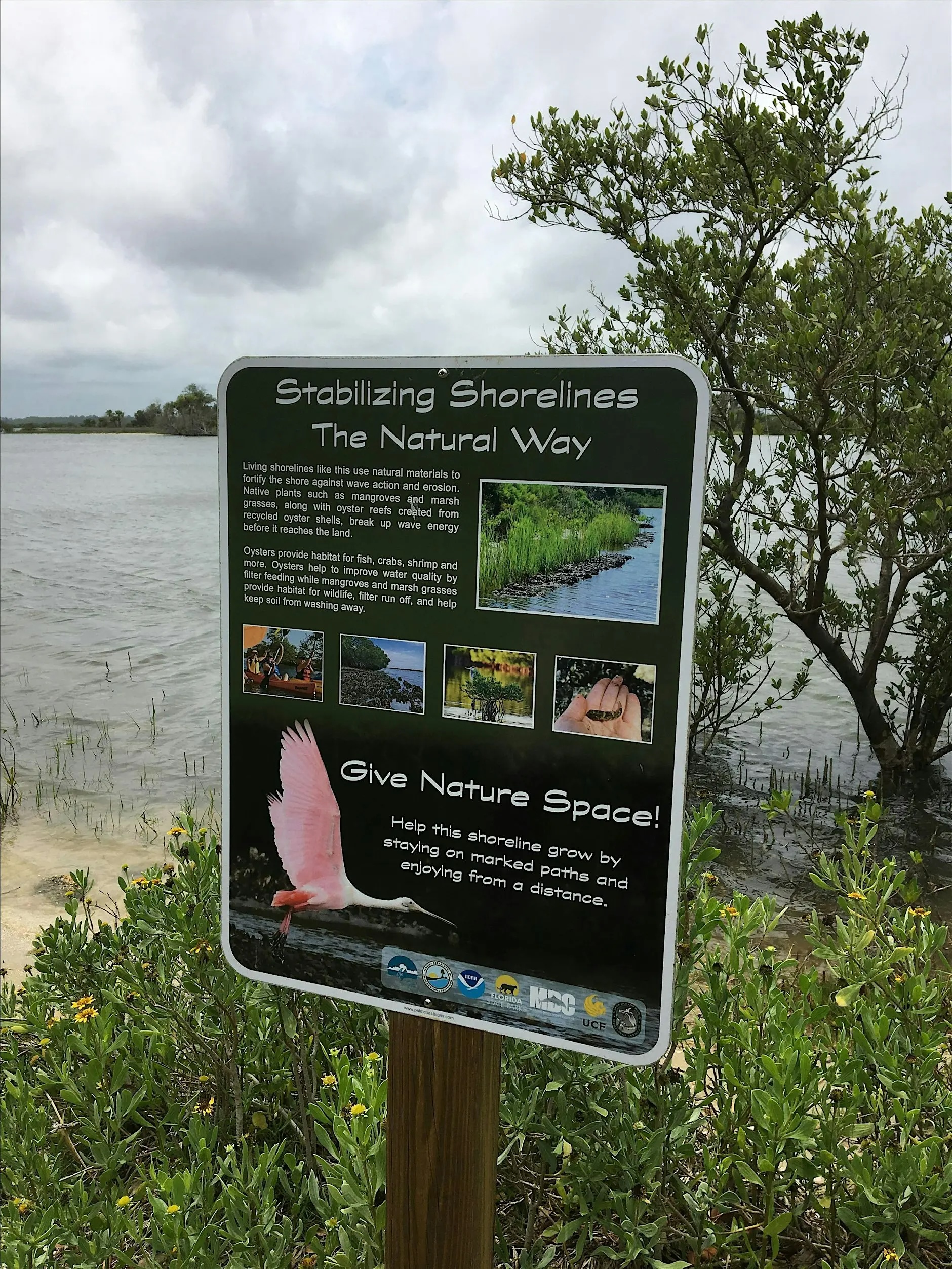
Living Shoreline Training: Southwest Coast - Sarasota County
WHERE: Lemon Bay Park & Environmental Center Englewood, FL
WHEN: Tuesday, June 2-Wednesday, June 3 • 9 AM-5 PM
This course is designed for those looking to gain in-depth knowledge of the process of installing living shorelines. CEUs available.
This 2-day course (9:00am to 5:00pm each day) is designed for those looking looking to gain in depth knowledge of how to permit and install living shorelines - marine contractors, landscape architects, municipality staff, property owners, and others interested in promoting living shorelines.
Topics covered range from the benefits of installing a living shoreline to permit applications, and include a field visit to a living shoreline site. Site visit(s) will be along the Indian River Lagoon and located within a 15-mile drive of the classroom location.
Course registration of $50 includes instruction, hardcopy & pdf of manual, refreshments, and lunches for both days.
|
Calling All Dock-Owners: Help Us Keep Monitoring!

We’d like to express our deep appreciation for James Haft who is kindly letting us use his lift for the summer! Thanks also to the enormous generosity of the Bahia Mar West Marina and the owners' commitment to clean water, the Suncoast Waterkeeper Patrol Boat has been safe and cared for over the years.
Suncoast Waterkeeper will be looking for a lift starting in September for our 25-ft Slayer Skiff that helps us monitor water quality, investigate pollution sources, and patrol our bays. Keeping our boat on a lift will improve our access to the water, allowing us to get out more often.
Here's the thing: Every day this boat is out on the water is a day we're collecting critical data, spotting problems before they get worse, and protecting the waters you love.
Can you help? Do you have dock space available, or know someone who might be willing to share? We'd love to chat about making this work!
Any leads? Contact Shelby Isaacson, Development & Volunteer Coordinator ([email protected])
Make a Splash with a Tax-Smart Gift!
Did you know you can protect our local waterways and save on your taxes at the same time? If you are 70½ or older, you can donate directly to Suncoast Waterkeeper from your Traditional IRA using a Qualified Charitable Distribution (QCD).
Why it’s a win-win:
- 100% Tax-Free: The transfer goes directly to us, meaning you pay zero income tax on the distribution, even if you don't itemize.
- Satisfies your RMD: If you are 73 or older, a QCD counts toward your Required Minimum Distribution, helping you avoid a higher tax bracket.
How to do it:
- Contact your IRA custodian and request a "Qualified Charitable Distribution" form.
- Direct the gift to Suncoast Waterkeeper, Inc. 3. Drop us a line at [email protected] to let us know it's coming, as custodian checks often arrive without donor names!
Tip: The check must be made payable directly to Suncoast Waterkeeper to qualify for the tax benefit. Consult your financial advisor to see how a QCD fits your goals.
For a Full Listing of Our Events and Ways to Act, Visit Our Events Page.
To get involved, send an email to [email protected]
Like we are doing? Join our clean water mission!
https://www.suncoastwaterkeeper.org/
Author