February 2026 Newsletter
|
MONITOR
What We Stand to Lose: The Ecological Value of Terra Ceia Aquatic Preserve
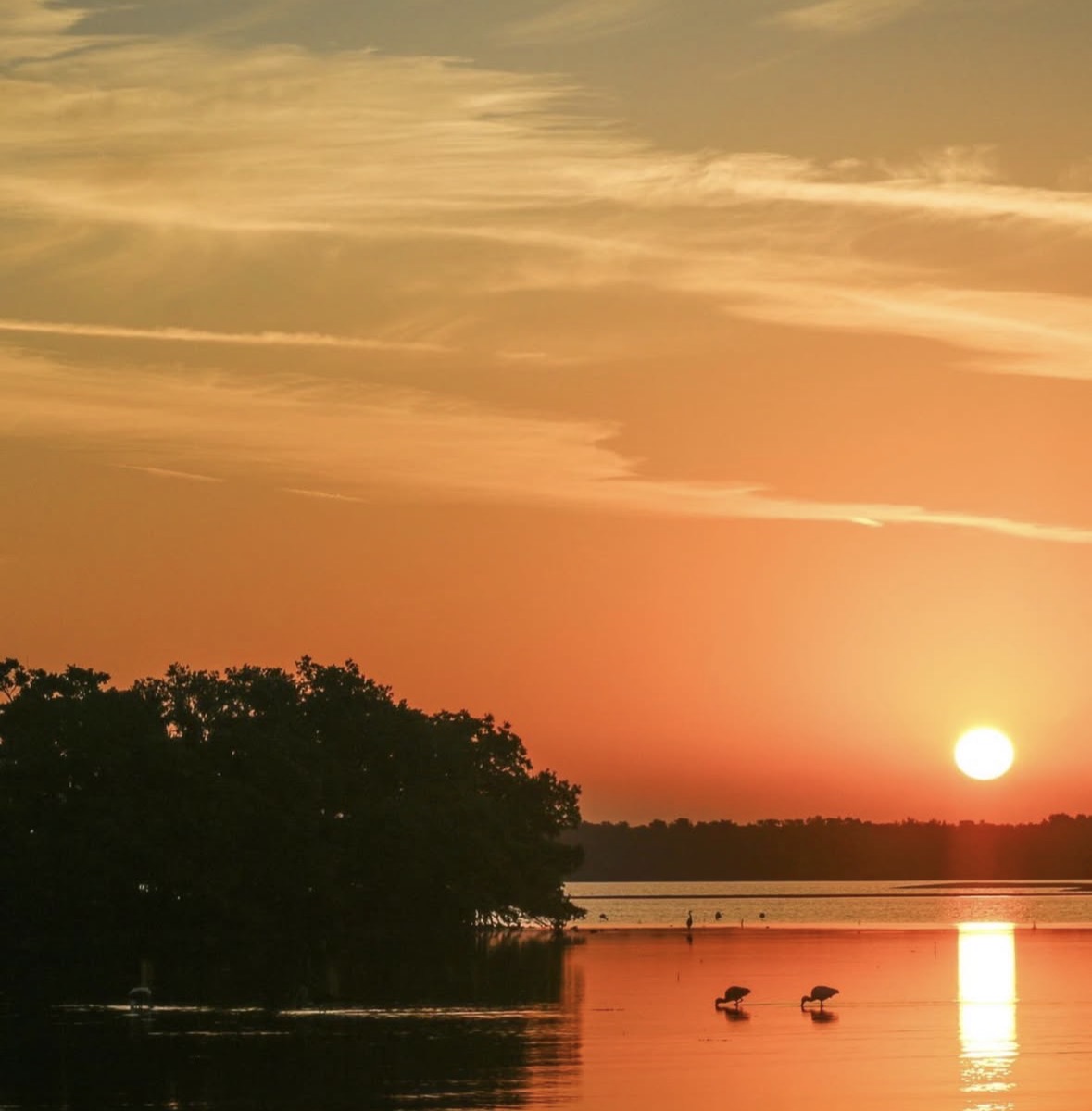
To many people, the word “preserve” suggests a quiet, untouched place. While those qualities can describe moments at Terra Ceia Aquatic Preserve, they do not capture its true character. This is not a passive landscape. It is a thriving, rare, and exceptionally productive ecosystem...and one of the last intact natural systems remaining in Tampa Bay.
February is For the Love of Wetlands month at Suncoast Waterkeeper, and the timing is fitting. If the cruise port proposal moves forward, what would be lost is not only beauty, but a web of ecological benefits essential to Tampa Bay’s economy and to the life it supports, human and otherwise.
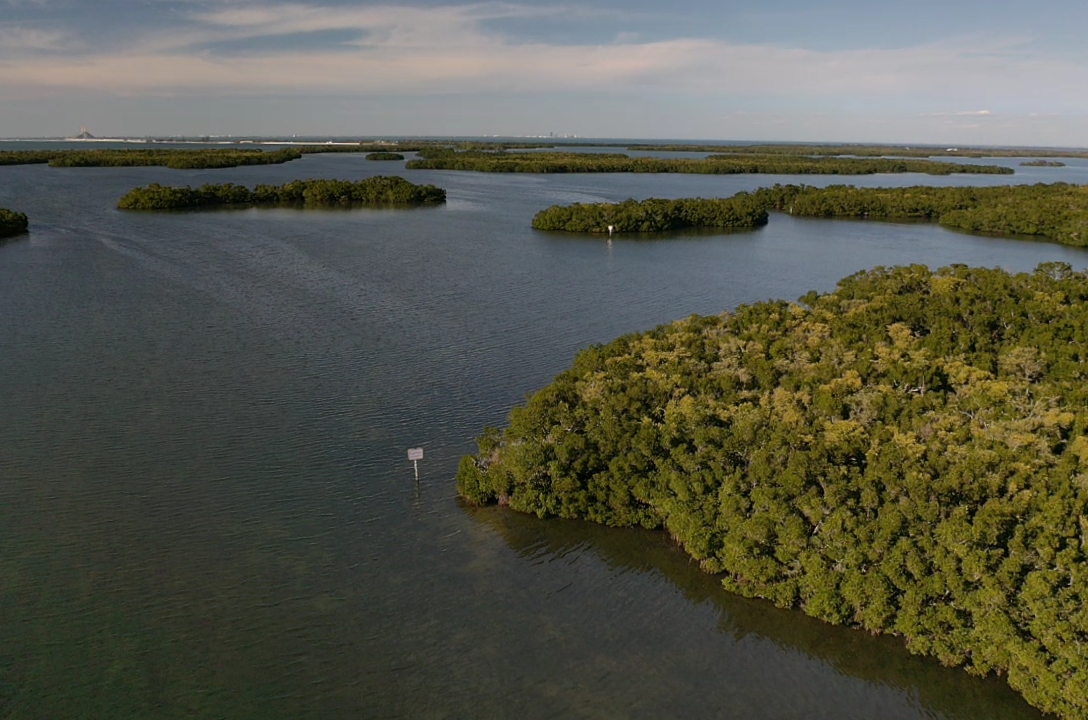
Spanning more than 21,700 acres, the preserve is defined by shallow waters and largely unaltered wetlands. Interconnected and largely unaltered seagrass beds, mangroves, salt marshes, tidal flats, and hardbottom habitats form the foundation of this healthy estuary. These habitats filter pollution, stabilize shorelines, and provide shelter and food for marine life.
The privately owned Knott-Cowen Tract sits inside the preserve’s geographic boundary and is surrounded by protected waters. Scientists have long treated this area as part of a single ecosystem. Fish, birds, tides, and pollution do not follow legal property lines. Dredging channels as deep as 50 feet for cruise ships in waters that average only a few feet raises obvious concerns about irreversible damage.
Long-term monitoring shows how productive this system is. Since 1993, nearly 700 bottom-dwelling species and 200 unique fish species have been recorded in the preserve. Within the proposed project footprint alone, 88 species have been documented, including snook, red drum, spotted seatrout, gag grouper, gray snapper, blue crab, and pink shrimp. These species support both recreational fishing and commercial seafood industries throughout Tampa Bay. The Florida Department of Environmental Protection and the Tampa Bay Estuary Program have also identified these habitats as essential for threatened and endangered wildlife such as roseate spoonbills, reddish egrets, American oystercatchers, and Florida manatees.
Seagrasses, widely recognized as a key indicator of water quality, cover more than 3,400 acres within the preserve, with about 113 acres (about 85 football fields) in the proposed project area. These underwater meadows play a critical ecological role. They filter pollutants, stabilize sediments, and provide nursery habitat for fish and shellfish. Seagrasses are also a primary food source for manatees. When seagrass declines, whether from direct removal or from degraded water quality, the entire food web becomes less stable. Such losses have severe consequences including large scale manatee die-offs like those observed in Indian River Lagoon.
Mangroves and salt marshes add another layer of protection. More than 120 acres of mangroves fall within the proposed footprint. These forests absorb storm surge, reduce erosion, and recycle nutrients while creating habitat for birds and recreationally and commercially important fish.
These habitats also protect nearby communities from flooding, improve water quality, and sustain fishing and tourism economies. Their value has been recognized by Big Waters Land Trust, which recently identified land within the preserve as a conservation priority because of its role in coastal resilience.
The proposed cruise terminal would transform shallow, living waters into just another industrial port. For the love of wetlands, for the love of Tampa Bay and West Central Florida, this is a loss we cannot afford.
SIGN THE PETITION NOW
INFORM
Our Best Chance to Save Our Wetlands in Manatee County: SB 840 and HB 217
For those familiar with the Save Our Wetlands campaign in Manatee County, hearing Senate Bill 180 will carry heavy connotations. Last year, SB 180 is exactly what prevented Manatee County Commissioners from reverting wetlands buffer protections back to their previous state. Senate Bill 180 Section 2(b) states: For 1 year after a hurricane makes landfall, an impacted local government may not propose or adopt: (b) A more restrictive or burdensome amendment to its comprehensive plan or land development regulations. This language prevents counties from taking action to protect wetlands and wetland buffers, among other things, which are crucial in maintaining coastal resiliency.
Suncoast Waterkeeper has been sharing an action alert from 1000 Friends of Florida which aims to find a fix for last session’s SB 180. As of now, Senate Bill 840 offers the chance to restore limited, but essential local planning authority. But Senate Bill 840 cannot be passed without a companion in the House. Enter House Bill 217. 1000 Friends of Florida suggests this would be the best option to put on the agenda and amend language to match SB 840.
To be clear, this is the only pathway to restoring Manatee County wetland buffer protections any time soon. Many representatives haven’t prioritized fixing SB 180 because they don’t see or experience the damage it has done to local planning efforts to safeguard our communities against increasingly extreme weather conditions. Write to the chair and members of the Intergovernmental Affairs Subcommittee and share how SB 180 has impacted our life here on the Suncoast, respectfully request that they put HB 217 on the agenda and amend it to match SB 840.
A special shout out and appreciation to Manatee County Commissioner George Kruse for his unwavering leadership on this issue. If we want the House to act, they must hear from you!
TAKE ACTION NOW
In memory of Commissioner Carol Ann Felts, a passionate champion for protecting Manatee County’s wetlands and strengthening the Comprehensive Plan. Her leadership reflected a deep conviction that wetlands are essential to our community’s safety, water quality, and future resilience. We honor her legacy.
Why Mangroves Matter
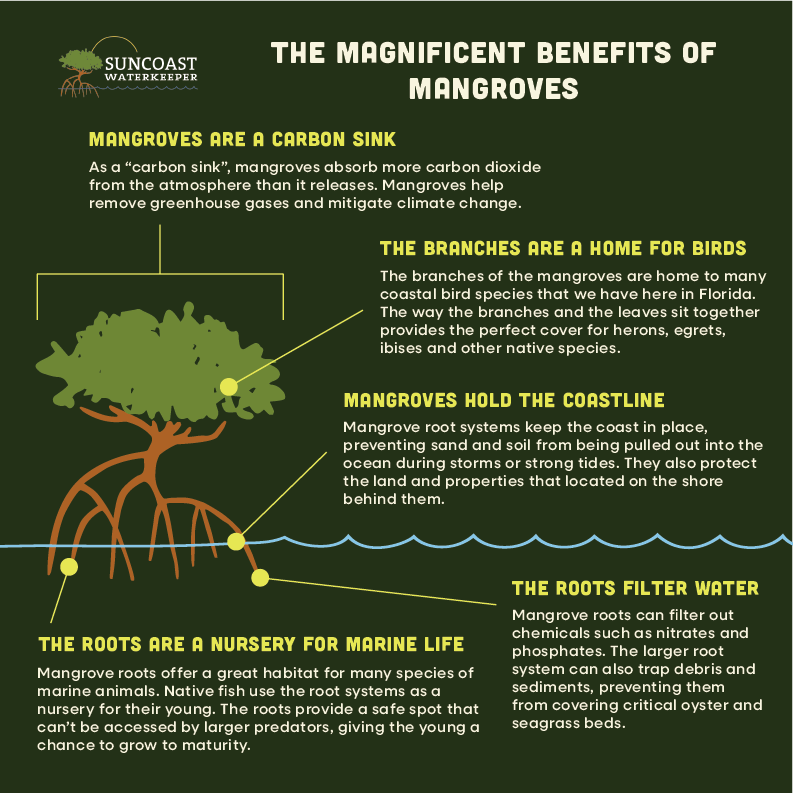
Mangroves are powerhouses. These coastal wetlands are some of the most valuable and vulnerable ecosystems we have. In Florida, mangroves are the only tree species with legal protection, and it's easy to see why. They play a major role in helping our communities bounce back after hurricanes and provide crucial habitat for our wildlife.
In Manatee County alone, mangrove flood protection benefits are estimated at $54.3 million per year (TBRPC, 2023). That’s money saved as well as homes and lives protected, just by keeping these natural systems healthy.
Despite all they do, mangroves are disappearing fast. Around the world, they’re one of the most threatened ecosystems. Locally, they’re often trimmed illegally to open up waterfront views, even though Florida law requires them to stand at least six feet tall.
Here on the Suncoast, mangroves are part of what makes this place so special. They support our fisheries, protect our shorelines, and power our tourism economy. They’re a key part of our environment and our way of life. If we don’t protect them now, we risk losing not just the trees but all the incredible things they make possible.
Dr. Abbey's Wetlands Corner: Recommendations from a Wetland Scientist
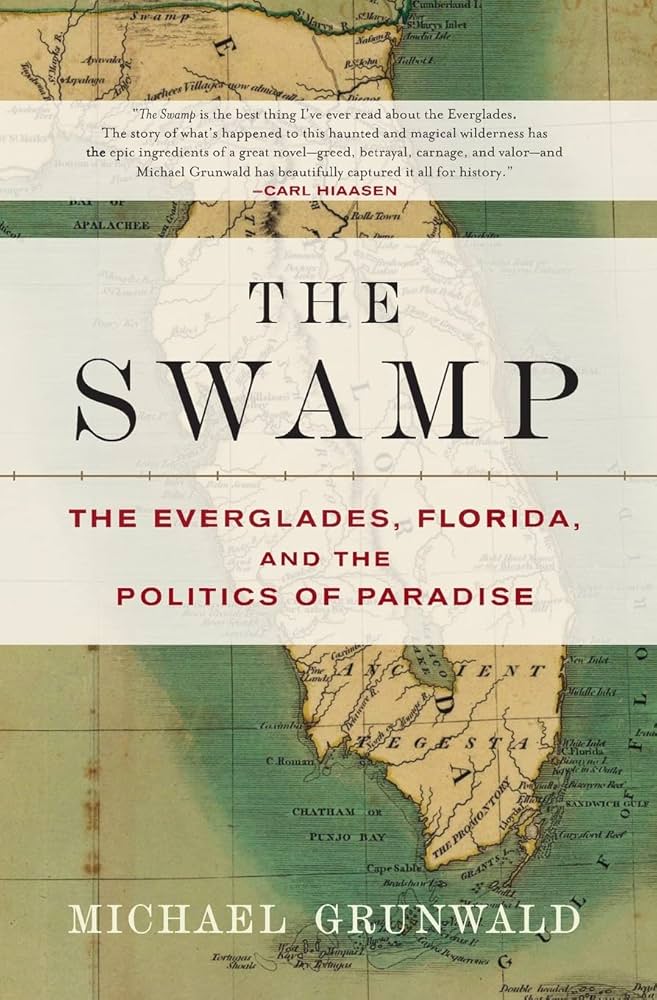
For the Love of Wetlands, I recommend reading The Swamp: The Everglades, Florida, and the Politics of Paradise by Michael Grunwald (2003). An investigative non-fiction novel that reads today not as history, but as an ongoing story. It traces how one of America’s most popular and important wetland systems, the Everglades, was drained, diked, parceled, and politicized, then slowly reimagined as something worth saving. The book captures the constantly repeating contradiction at the heart of the Florida experience: we undervalue wetlands, engineer the natural system to fuel growth, realize what we lost, then launch ecosystem restoration projects in an attempt to repair what we have undone.
The Everglades are what scientists call a basin wetland or a massive, landscape-scale system whose ecological functions operate across hundreds of miles. Like all wetlands, it filters water, stores floodwaters, recharges aquifers, supports fisheries, sustains wildlife, and buffers coastal communities from storms. Because of its size, restoring even part of its natural function through the Comprehensive Everglades Restoration Plan (CERP) has required tens of billions of dollars and decades of political negotiation. Twenty-five years and three months later, restoration is still ongoing and so is the need to continue to fund the multitude of million dollar projects. The scale alone reveals the cost of waiting too long to protect what nature built for free.
But what The Swamp makes clear is that the Everglades is not unique in function, only in scale. Across Florida, thousands of smaller wetlands quietly perform the same services. Each wetland is, in essence, a miniature Everglades system. Lose enough of them, and local governments will face the same dilemma that drove Everglades restoration: spending millions potentially billions trying to recreate a fraction of what once existed naturally. Because once they are gone, we will pay dearly to recover even a percentage of what they once provided freely. If you decide to read it, send me your thoughts.
ACT
Donor Highlight: Doug & Barbara Weimer
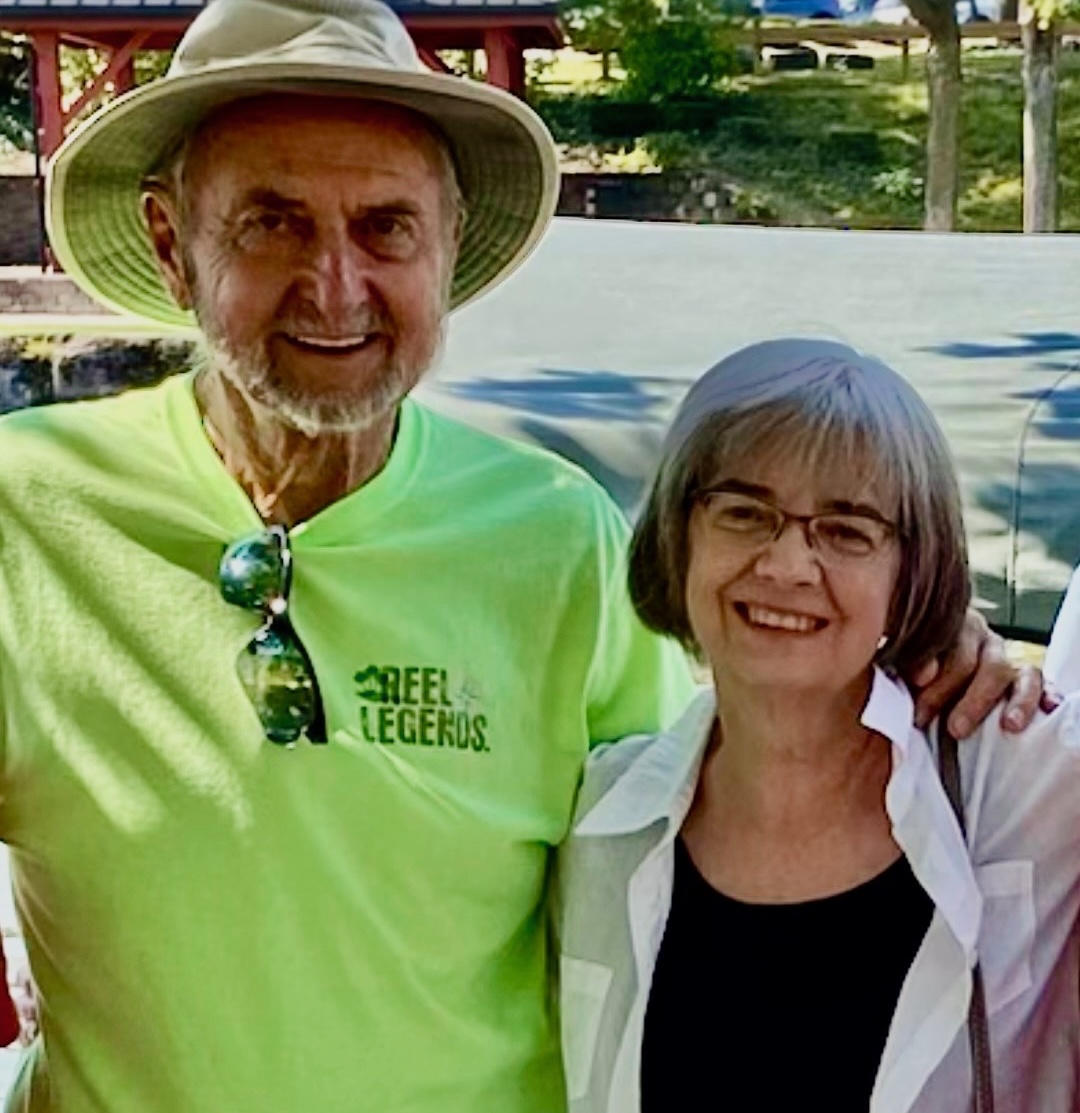
“We support Suncoast Waterkeeper because clean water isn't a luxury—it's a necessity. They don't just talk about clean water—they fight for it. Their fearless work holding polluters accountable gives us hope that future generations will inherit the pristine waterways they deserve. That's why we give. Our waters need defenders, not bystanders."
- Doug & Barbara Weimer
A special thank you to the following generous donors:
Barbara & Doug Weimer
Maureen Merrigan & Wendi Bundy
Ken Schneier
Thomas Waite
Voices for Water is Back March 28th!
Mark your calendars! Voices for Water, our community advocacy program, is back this spring with an in-person session on March 28 (World Water Day!), followed by a virtual session on April 1.
Voices for Water empowers everyday residents to confidently speak up for clean water and conservation. We will break down key water quality issues affecting Manatee County & the City of Bradenton and Sarasota County & the City of Sarasota, and you’ll walk away with clear, accessible materials to help you engage with and share information with local decision-makers.
Whether you’re brand new to advocacy or looking to deepen your impact, this program is a great way to get involved in local policy and create real change for our waterways!
SIGN UP FOR VOICES FOR WATER HERE
Join Us for Our Annual Members Meeting on April 11!

We are thrilled to announce that Suncoast Waterkeeper’s Annual Members Meeting will be held on April 11, 2026 at the Mote Chickee Hut. The evening will include updates from our team on what we have been monitoring and how we are using the information to inform others and act to protect local waters. All the work our members make possible. The Annual Meeting is a time to connect with fellow clean-water champions! After the meeting, we will lead another night paddle to enjoy the waters we love. Stay tuned for details and sign-up information!
|
|
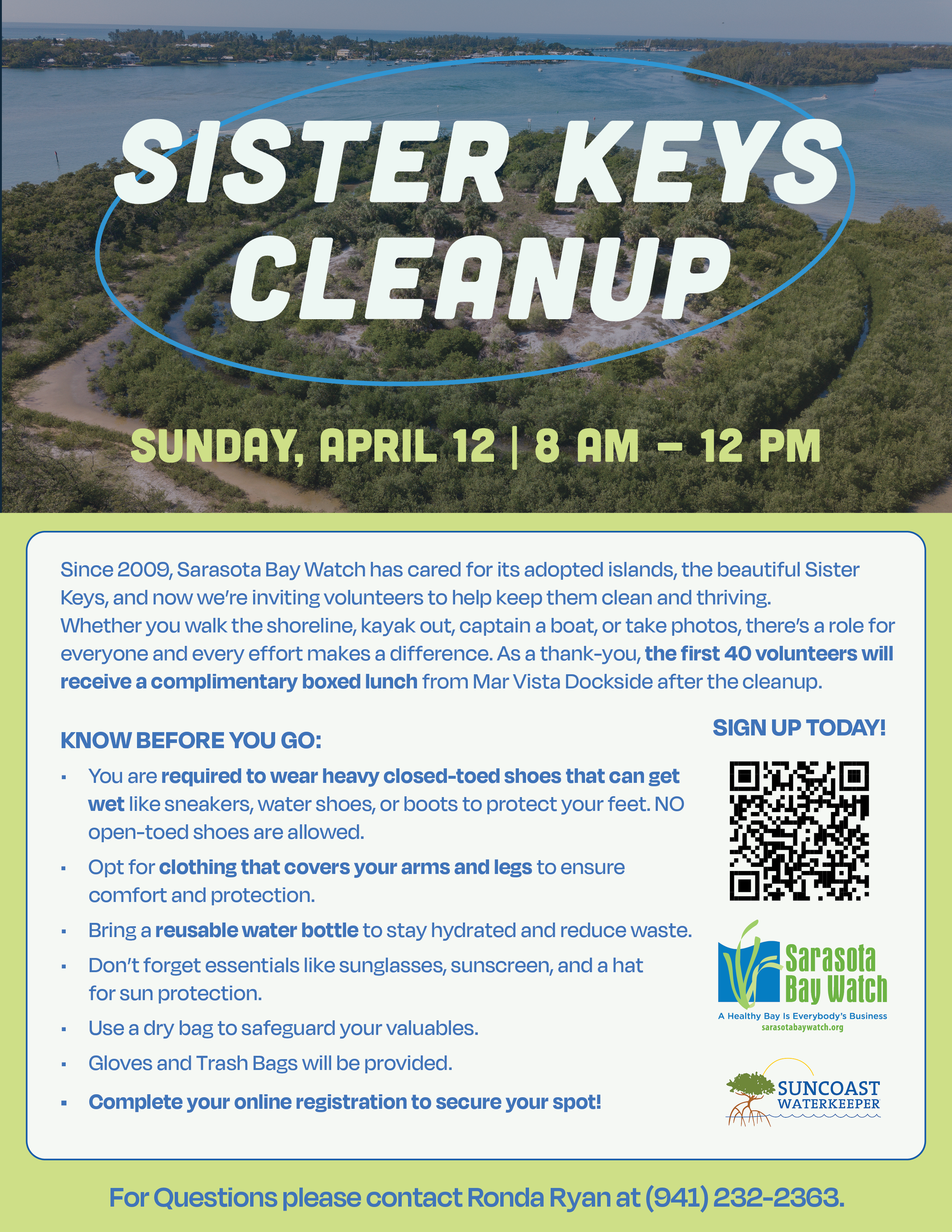
Show Some Love For Our Waters with the Sister Keys Cleanup April 12!
|
To get involved, send an email to [email protected]
Like we are doing? Join our clean water mission!
https://www.suncoastwaterkeeper.org/
Author