August 2025 Newsletter
Have you seen the news?
|
|
HIGHLIGHTS
2025 Mangrove Mapping Results: Hurricanes Cause Canopy Loss Across Sarasota & Palma Sola Bays
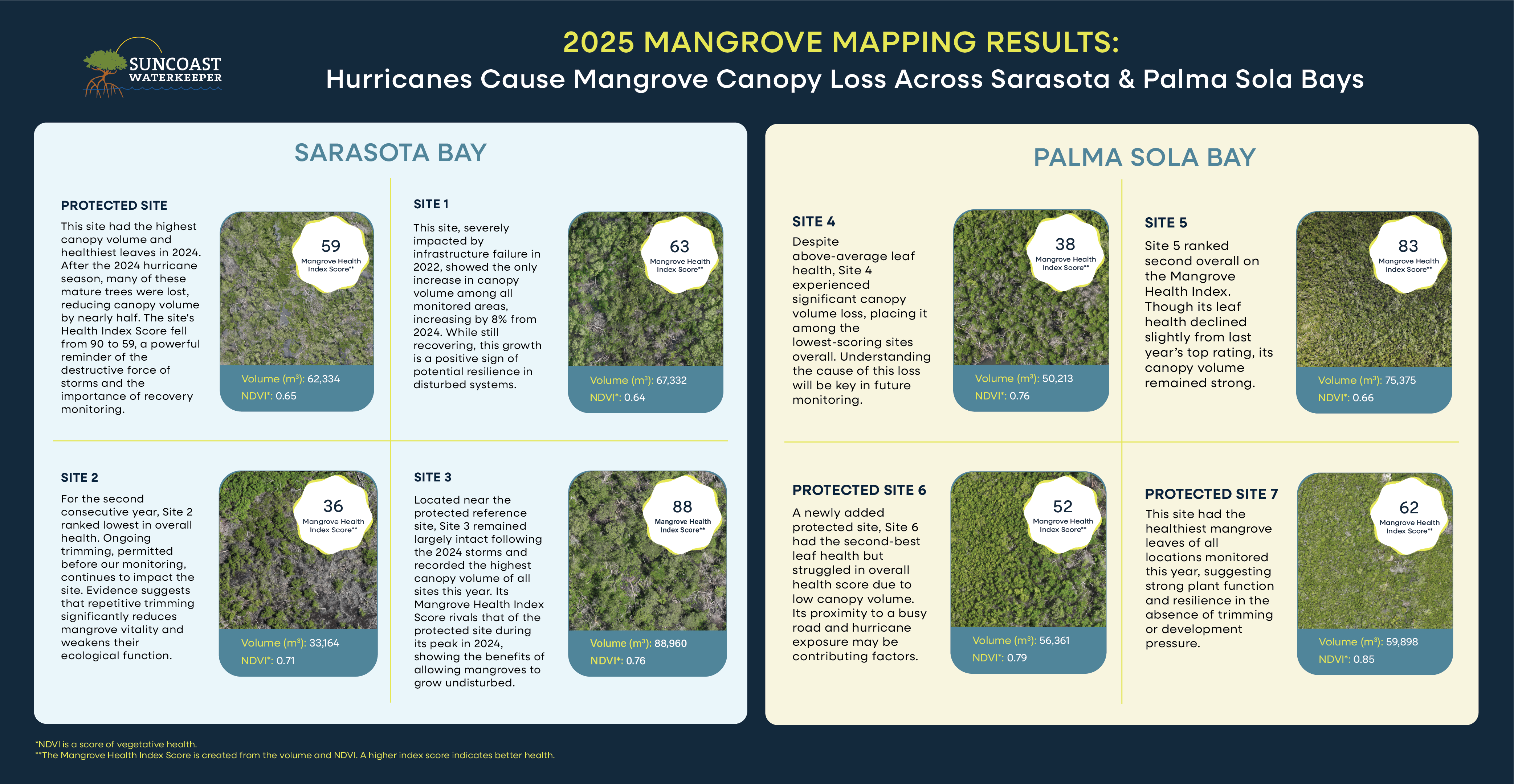
The 2024 hurricane season took a heavy toll on mangroves across Sarasota and Manatee counties, according to the data from our second year of the Mangrove Rangers program. On World Mangrove Day, July 26th, the volunteer rangers gathered at the Sarasota Sailing Squadron to hear the interpreted results, celebrate the hard work they put into collecting data, and celebrate our mighty mangroves.
As for the results, one of the most striking findings came from a protected site in Sarasota Bay. Last year, it was used as our model site, scoring as one of the healthiest mangrove forests in the region. After the hurricanes, however, nearly half its canopy was lost, dropping its health score from 90 to 59. The health score is composed of two indices: one for canopy volume and one for leaf health. Together, these indices provide a snapshot of mangrove health, and in turn, can reveal the functional potential of mangroves. The loss of canopy at the protected site demonstrated that there isn’t a forest out there protected from Mother Nature and her increasingly powerful storms. However, it also demonstrates the ability of this coastal forest to serve as the initial defense against powerful winds and waves that are weakened by these majestic trees before reaching inland.
Our survey also illustrated signs of resilience. Site 1 in Sarasota Bay, previously damaged by a sewer pipe break in 2022, showed growth this year, with an 8% increase in canopy volume. Site 3, adjacent to the protected area that lost half of its canopy volume, remained largely intact and now serves as our model forest with the highest canopy volume of all monitored sites.
We also introduced two new monitoring sites in Palma Sola Bay, located in protected areas. These additions enabled us to compare the impacts more effectively across different land use types and protection statuses. Protected Site 7 ranked among the top performers, indicating strong ecosystem functions such as erosion control, improved water quality, serving as a fish nursery, and providing a bird rookery. Site 7 resilience in the absence of trimming or development pressure was evident by its health score. The second protected site, Site 6, exhibited signs of strain, characterized by low canopy volume, which may be attributed to its proximity to a busy road and exposure to the 2024 hurricanes.
These results highlight the challenges and the hope for mangrove recovery. As storms intensify and development pressures grow, protecting mangroves is more critical than ever. These trees are not just coastal vegetation; they serve as a frontline defense for our communities and a vital lifeline for local biodiversity and the economy. The Tampa Bay Regional Planning Council (2023) estimates that flood protection benefits from the remaining mangrove systems in Manatee County amount to $54.3 million per year.
Read a more detailed breakdown of each site HERE.

Empowering North Port Residents to Become "Forever Free" from PFAS,
One Test at a Time
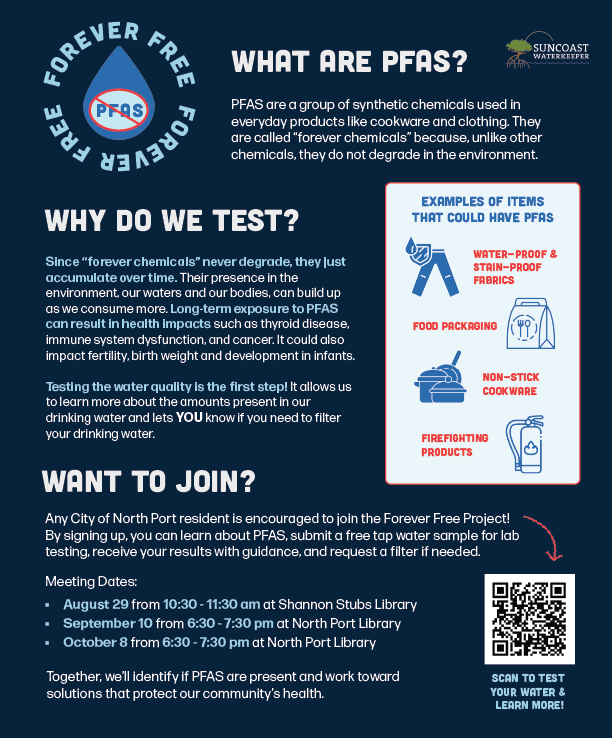
This month, Suncoast Waterkeeper launched Forever Free, a community initiative designed to raise awareness about PFAS in the city of North Port and provide free water testing to residents. The goal of the program is to monitor city waters for the forever chemicals and to share the results and solutions with the community.
PFAS (per- and polyfluoroalkyl substances), also known as “forever chemicals”, are man-made compounds used in everyday products like non-stick cookware, water-resistant clothing, and processed food packaging. They are called “forever chemicals” because they do not break down in the environment and can accumulate in our bodies over time. Long-term exposure to PFAS has been linked to thyroid disease, immune dysfunction, and even cancer.
“This program aims to raise awareness about PFAS, discover the concentration of PFAS in North Port drinking water, and advise participants on what actions they can take to reduce intake of these harmful pollutants,” says program leader and water quality specialist Peyton Faulk.
Further testing remains crucial. A 2023 study by the University of Florida found PFAS in 70% of surface water samples from Sarasota County. Another study analyzing tap water across the state revealed that the City of North Port had both the highest number of PFAS compounds detected and the highest concentrations within the county, with the average PFAS levels significantly exceeding the statewide average. (Learn more by clicking here)
Forever Free will unfold in two phases. First, residents are invited to attend a community meeting at either the North Port Library or the Shannon Staub Library to learn about PFAS, receive a sampling kit, and collect water samples from their home or workplace. A certified third-party lab will analyze samples. In September, participants will return for small group sessions to review their results with trained PFAS Advisors. Residents with elevated results and in financial need will also receive a free water filter and guidance on safe use.
“The federal government has dragged its feet and weakened PFAS rules under the EPA’s Safe Drinking Water Act, leaving communities like North Port exposed to dangerous ‘forever chemicals.’ Every delay puts more families at risk. North Port residents deserve safe water now,” said Dr. Abbey Tyrna, Waterkeeper & Executive Director of Suncoast Waterkeeper.
If you live in North Port, don’t wait! Register today to get your water tested for free and join your neighbors in protecting our community’s health.
- Friday, August 29, 10:30 - 11:30 am at Shannon Staub Library
- Wednesday, September 10, 6:30 - 7:30 pm at North Port Library
- Wednesday, October 8, 6:30 - 7:30 pm at North Port Library
You don’t have to live in North Port to help in our Forever Free effort either! Sign up to volunteer and train as a PFAS advisor HERE
Don’t Swim There! Wrack and Fecal Indicator Bacteria
Each week during our fecal indicator bacteria monitoring, we measure concentrations of enterococci. These bacteria, a large genus commonly monitored by government agencies, are used to identify potential fecal contamination in water.
Research shows that enterococci can thrive in decomposing vegetation, where they replicate and increase rapidly. For this reason, one of the parameters we track is “wrack”—piles of decaying seagrass (e.g., manatee grass) and seaweed (e.g., sea lettuce, Ulva sp.) found at our monitoring sites.
If you’ve ever felt uneasy wading through a warm pool of decomposing vegetation, your instincts may be right—such environments can signal potential health risks.
What makes wrack relevant to fecal indicator bacteria, such as enterococci?
Wrack can promote the growth of enterococci by providing organic carbon, nutrients, and protection from sunlight, a natural mechanism that helps kill these bacteria (2). As marine plants decompose, they act as an insulator, trapping heat and thereby increasing the temperature. Higher temperatures enable bacteria to replicate more rapidly, and the wrack serves as a substrate for the bacteria to grow on and accumulate over time (1, 3). These combined factors create favorable conditions for the growth of enterococci. Now that we are tracking the amount of wrack directly located in our sampling area, we are finding that sites with a high amount of wrack sometimes have enterococci levels that exceed the Safe to Swim criteria set by the Florida Department of Health.
A 2011 study at Cowell Beach, California, investigated enterococci levels in wet, dry, and surf zone wrack to examine their relationship with enterococci, water, and sediment. Dry wrack was stranded on the dry sandy region of the beach away from the water line; wet wrack was stranded near the upper reaches of the swash zone (the area where waves are breaking on the beach); and surf zone wrack was continuously suspended in the water. Enterococci levels in dry wrack were found to be 100 times greater than wet wrack, which was 10 times higher than surf zone wrack. (2) These findings tell us that beaches with high amounts of wrack in the water column can allow enterococci to persist longer compared to beaches without wrack.
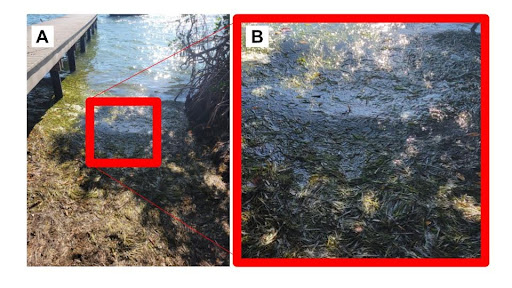
Photo A on the left shows the kayak launch at Longboat Key Bayfront Park, with the red box delineating our sampling area. Photo B on the right zooms into our sampling area, which is completely covered in surf zone wrack. Peyton took this photo on June 17, 2025, and the enterococci result was 108 #/100 mL, which is “poor” based on the Safe to Swim criteria : 0-35 is good; 36-70 is moderate, 71 and up is poor, but would be within Florida’s Class III water quality standards for recreational waterbodies. If the results of the California study hold here, then we can assume that the water closer to shore had 10 times the concentration (1,080 #/100 mL) as the area where we pulled the sample.
Dry, wet, and surf zone wrack are frequently present in our collection sites, especially after an incoming tide or rain event. We are still investigating the relationship between enterococci bacteria and wrack in our local waters. In the meantime, we advise you to avoid skin contact with any form of wrack, especially dry wrack on the shore, as it can potentially host high levels of fecal indicator bacteria.
If you have any questions or would like to discuss this further, please contact Pia at [email protected].
References:
-
Abdool-Ghany, A. A., Sahwell, P. J., Klaus, J., Gidley, M. L., Sinigalliano, C. D., & Solo-Gabriele, H. M. (2022). Fecal indicator bacteria levels at a marine beach before, during, and after the COVID-19 shutdown period and associations with decomposing seaweed and human presence. Science of the Total Environment, 851(Part 2), 158349. https://doi.org/10.1016/j.scitotenv.2022.158349
-
Imamura, G. J., Thompson, R. S., Boehm, A. B., & Jay, J. A. (2011). Wrack promotes the persistence of fecal indicator bacteria in marine sands and seawater. FEMS Microbiology Ecology, 77(1), 40–49. https://doi.org/10.1111/j.1574-6941.2011.01082.x
- Kirkman, H., & Kendrick, G. A. (1997). Ecological significance and commercial harvesting of drifting and beach-cast macro-algae and seagrasses in Australia: A review. Journal of Applied Phycology, 9(4), 311–326.
STATE & NATIONAL WATER NEWS:
Senate Bill 180 Strikes Back & Manatee County Postpones Wetland Buffer Vote Again
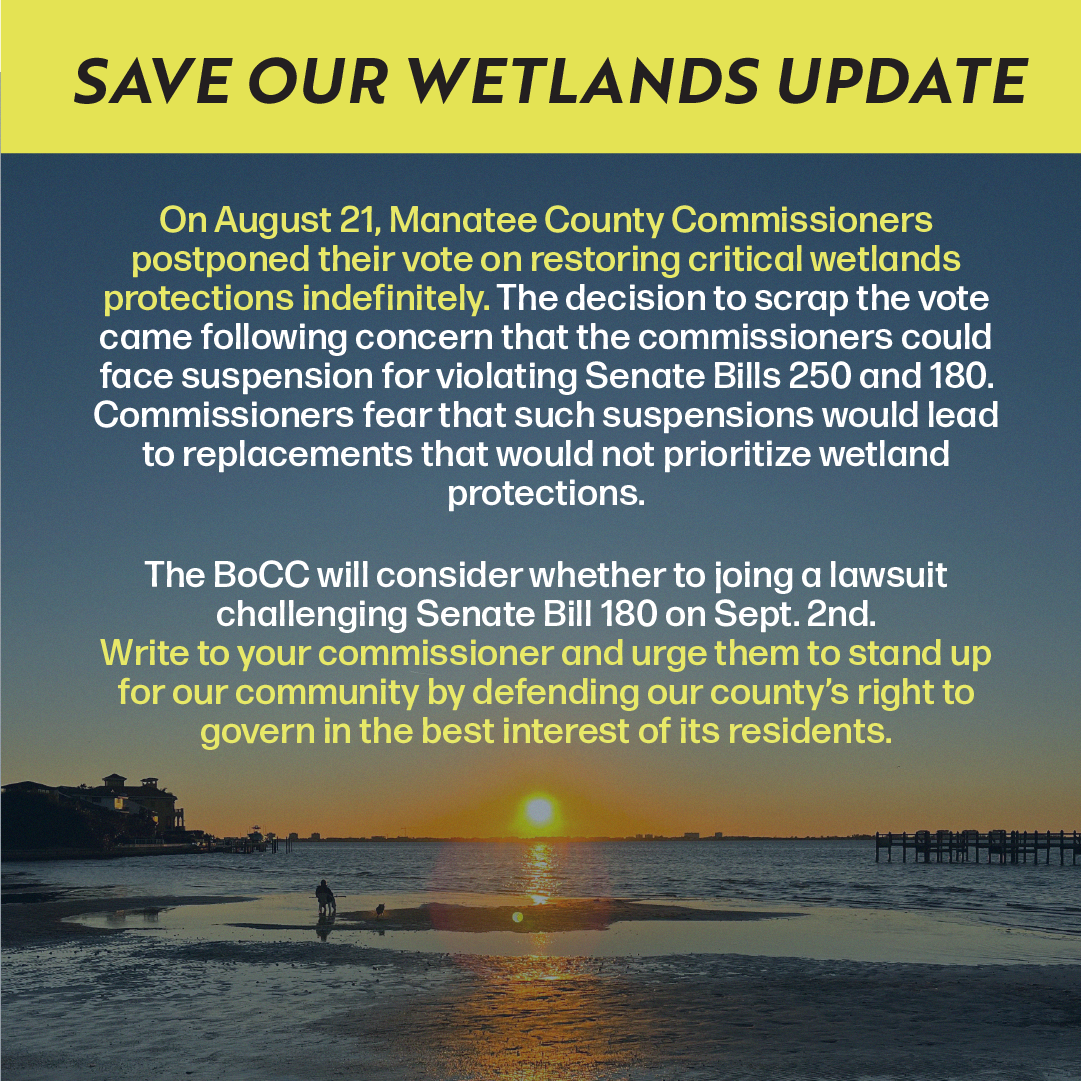
On August 21, the Manatee County Board of Commissioners (BoCC) was scheduled to vote on restoring the county’s 50-foot wetland buffer requirement. The Commission had initially planned to address the issue in May but delayed its action after receiving letters from state agencies warning that such a move would violate two new state laws, Senate Bills 250 and 180.
These bills, passed under the banner of hurricane recovery, were pitched as ways to make rebuilding after storms like Ian, Helene, and Milton less burdensome. However, critics argue that the laws go much further, eroding local control and stripping communities of their ability to establish stronger protections for shorelines and fragile ecosystems. Ironically, these are the very ecosystems that shield us during hurricanes and other extreme weather events.
In the case of Manatee County, Commissioners George Kruse, Carol Ann Felts, and Tal Saddique expressed their support for restoring the wetland buffers rolled back by a previous board. They even signaled willingness to face a lawsuit from the state. But when the governor threatened to suspend commissioners and replace them with appointees less inclined to support wetlands, the BoCC postponed the vote indefinitely.
This year’s Mangrove Mapping results highlight the urgent need for stronger safeguards, especially as even our most resilient mangrove sites, like our protected site in Sarasota Bay, remain one severe storm away from devastation. At Suncoast Waterkeeper, we remain committed to defending wetlands and advocating for the protections our communities and ecosystems need, despite the growing political obstacles. The flood protection benefits of wetlands alone, estimated at $16.3 million per year for these remaining systems, are enough for everyone to take stock in what is happening with SB 180.
This setback is another blow to wetlands protection in Florida, but it is not the end. On Tuesday, September 2nd, the BoCC will consider whether to join a lawsuit challenging Senate Bill 180 (see agenda item HERE). Write to your commissioners and urge them to stand up for our community by defending our county’s right to govern in the best interest of its residents.
Unfortunately, while we wait for a fix, developers have the green light to slash, burn, and fill our remaining wetlands. Next time our community floods, know that it was flooded by design.
Urge the Commissioners to Join the Lawsuit Against SB 180
Waterkeepers Florida Sues EPA Demanding Stronger Toxic
Chemical Limits in Florida Waters
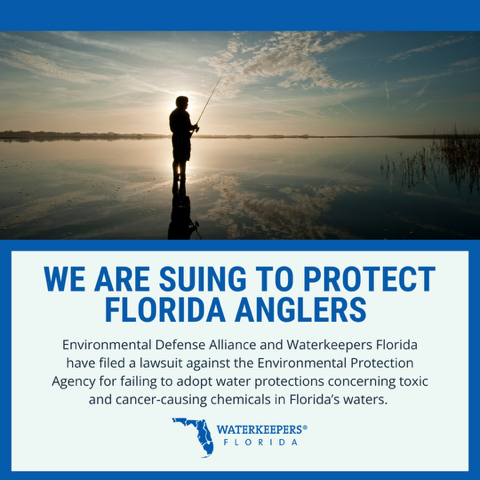
Suncoast Waterkeeper, through Waterkeepers Florida (WKFL) and alongside the Environmental Defense Alliance (EDA), has filed a lawsuit against the U.S. Environmental Protection Agency (EPA) to demand long-overdue protections for Florida’s waters. So far, officials have failed to protect anglers, seafood lovers, and everyday residents from toxic pollution in our waters.
Florida is required to review its water quality standards every three years; however, many of the state’s protections haven’t been updated since the 1990s. That means chemicals like benzene, a carcinogen found in pesticides and industrial solvents, are still governed by outdated limits, despite decades of new science showing the risks.
“Florida has the largest recreational fishery in the United States and [one of] the largest seafood industries,” said Lisa Rinaman, St. Johns Riverkeeper. “It only makes sense to protect Floridians from toxic chemicals that accumulate in our fish.”
Following a WKFL and EDA petition in 2022, the EPA itself admitted that Florida’s 1990s-era human health criteria for priority toxic pollutants did not protect Florida’s people and waterways. Specifically, they identified 77 toxic pollutants that needed new and revised limits. The agency proposed new standards in 2023, but never completed them after a presidential executive order froze the process.
Now, with no action taken, we are turning to the courts to ensure Floridians get the protections promised under the Clean Water Act.
“The goal of the Clean Water Act is to ensure that all U.S. waterways are ‘fishable and swimmable,’ but lax enforcement from our state and federal environmental protection agencies has prevented that goal from becoming a reality,” says Waterkeepers Florida Chair, Jen Lomberk. “Floridians deserve water that is clean and safe enough to swim in and fish from.”
Suncoast Waterkeeper is proud to advocate for standards to keep our waters clean, not just for our economy, but for the health of our families and communities on the Suncoast.
Read the full press release HERE.
LOVE YOUR BAYS CONSCIOUSLY:
Suncoast Waterkeeper Awards Hurricane Relief Grants to Local Fishing Guides
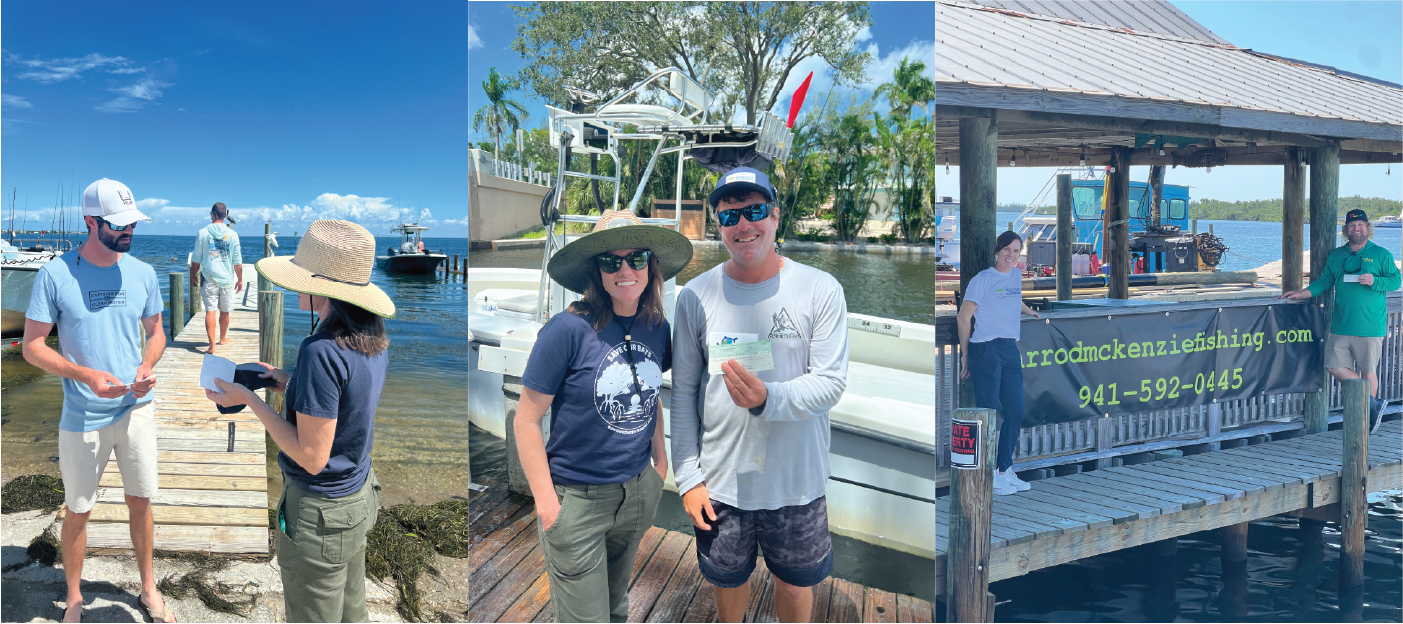
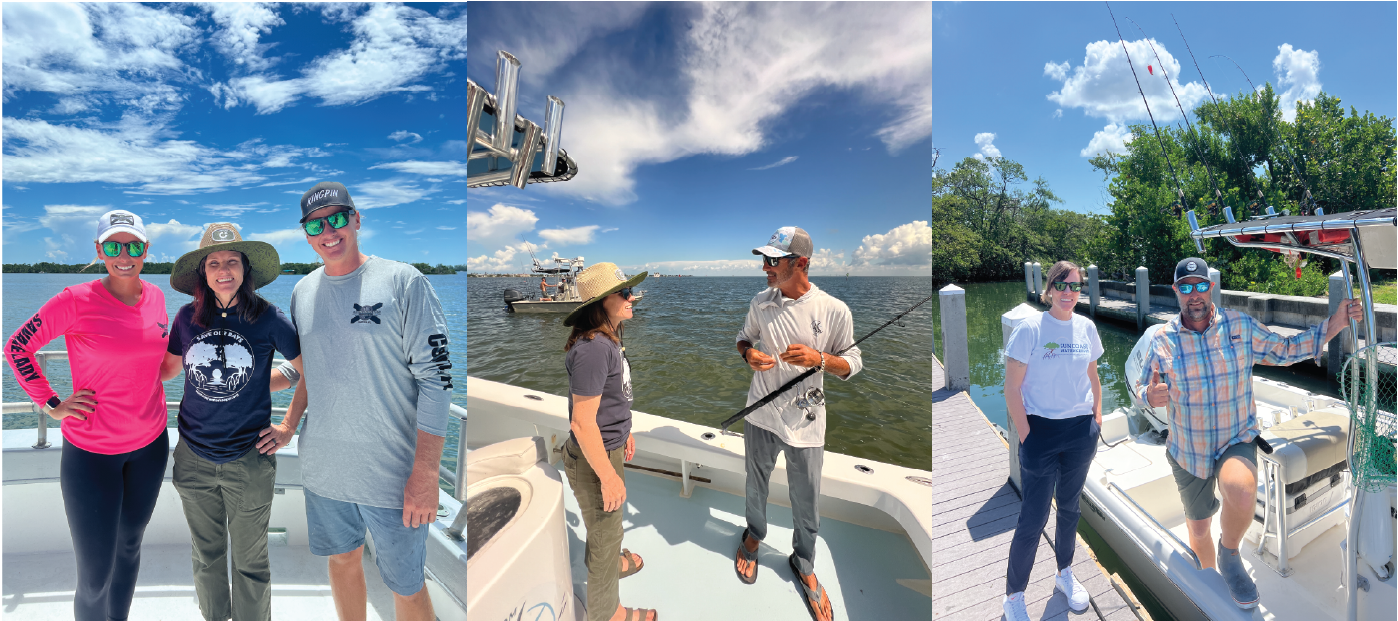
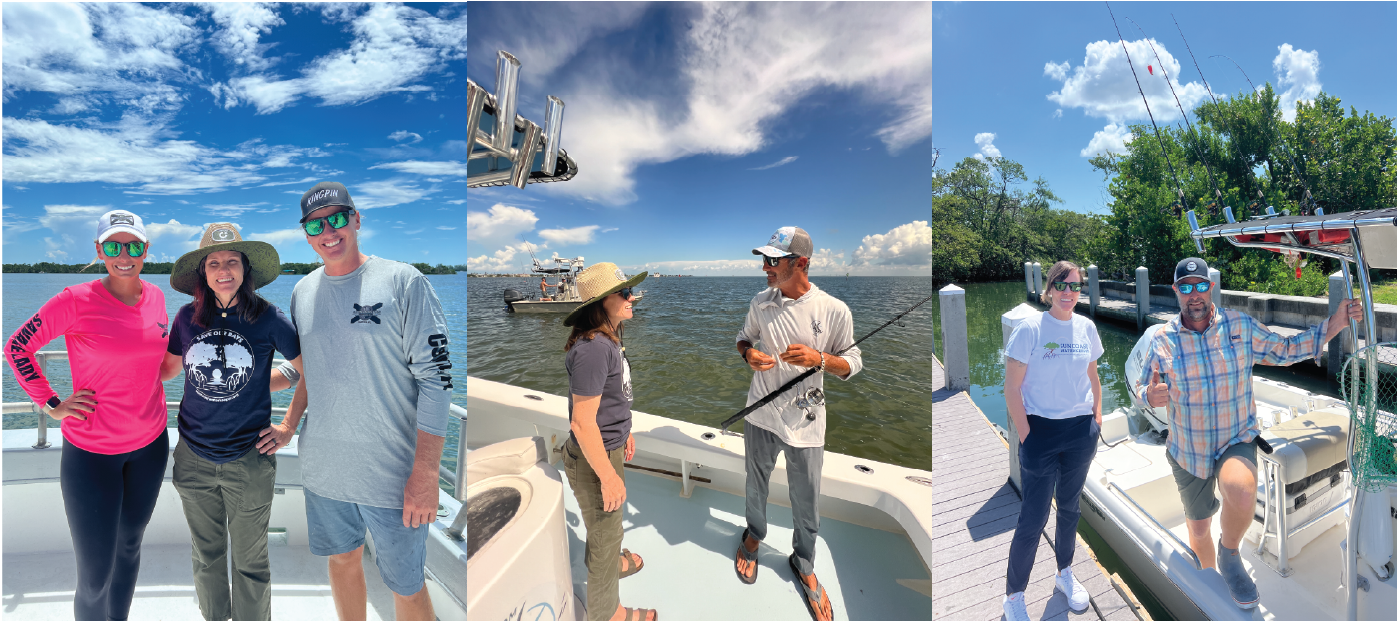
This month, Suncoast Waterkeeper had the pleasure of awarding nine hurricane relief grants of over $1,000 each to support local recreational fishing guides and captains. Thanks to a generous grant from the International Game Fish Association’s (IGFA) Worldwide Anglers Relief Fund (WARF), we were able to distribute $10,000 to these nine outstanding members of our Suncoast fishing community:
Taylor Cowieson, On a Mission Fishing Charters
Nicholas Graham, Graham Slam Fishing Charters
Zackary Horton, Landing Zone Fishing Charters
Brian Marcey, Breakwater Charters
Jarrod McKenzie, Jarrod McKenzie Fishing
Lance Plowman, Florida Fishing Fleet
Scott Tesinsky, Sarasota Family Fishing Charters
Nate Weissman, Capt. Nate’s Fishing Charters
David White, Captain David White Charters
During one-on-one conversations with the guides, a clear message came through: business is ready and waiting! You can help bring our beloved recreational fishing industry back up to speed by gifting a day on the water to family and friends! Reach out to any one of these talented guides for a memorable day enjoying the best of our Suncoast.
Join the Suncoast Waterkeeper Team! Become our Contract Development & Volunteer Coordinator
Suncoast Waterkeeper unites the region to protect and enhance our local waterways. We monitor water and habitat quality, inform the public and decision-makers, and take the necessary actions to ensure fishable, swimmable, and drinkable waters for all.
We are seeking a Development & Volunteer Coordinator to strengthen donor and volunteer engagement, coordinate fundraising campaigns, and provide database and communications support. This part-time contracted role is ideal for a detail-oriented and relationship-driven professional who thrives in a mission-driven, collaborative environment.
Key Responsibilities
Fundraising (40%)
-
Work with the Executive Director to develop and execute an objectives-based fundraising plan to achieve annual revenue goals.
-
Cultivate, solicit, and steward corporate partners.
-
Manage and expand a portfolio of corporate sponsors.
- Assist the Executive Director in researching, preparing, and submitting grant proposals for corporate support.
Campaigns, Events & Stewardship (30%)
-
Assist with event logistics for fundraising and member events (e.g., Bi-annual Giving Challenge, Suncoast Salon, Annual Members Meeting, and Brunch for the Bay)
- Work with the Communications and Engagement Manager to coordinate individual giving campaigns with fundraising toolkits, donor stewardship materials, and compelling impact stories.
-
Support regular fundraising campaigns across multiple platforms.
- Prepare timely, personalized gift acknowledgments (written and electronic).
Database & Reporting (15%)
- Serve as primary database administrator, maintaining accurate records of contributions, volunteer activities, biographical data, and prospect notes.
- Ensure best practices in data entry, coding, and tracking.
- Integrate and merge old records to adhere to established best management practices
-
Provide weekly updates summarizing gifts received, grant deadlines, volunteer activities, and progress toward plan objectives.
- Track and analyze fundraising and volunteer engagement performance.
Volunteer Coordination (10%)
- Serve as the main point of contact for volunteers, ensuring a positive and engaging experience.
- Recruit and schedule volunteers.
- Assist with volunteer recognition by highlighting volunteer contributions through social media, newsletters, and events.
Communications & Engagement (5%)
-
Collaborate with the Communications and Engagement Manager to craft donor- and volunteer-focused messaging.
-
Assist with newsletter and social media content to highlight initiatives, donors, and volunteers.
- Represent Suncoast Waterkeeper in the community and at events.
Qualifications
- Bachelor’s degree with 2–3 years of nonprofit fundraising.
- Proven track record of meeting or exceeding fundraising goals.
- Strong written and verbal communication skills.
- Familiarity with donor databases and online fundraising platforms.
- Self-starter with excellent organizational skills and the ability to manage multiple projects independently.
- Ability to travel locally as needed.
- High level of professionalism, integrity, and confidentiality.
- Knowledge of environmental issues, public health, or advocacy is a plus, but not required
What We Offer
Salary Range: $30,000–$35,000 (contracted position)
Hours: 20 hours per week
Location: Remote with occasional local travel
- Flexible, remote work environment with occasional local travel.
- Opportunity to make a significant impact in a growing nonprofit organization.
- Clear growth path with potential to expand responsibilities and leadership role based on performance.
- Opportunities to get out on the water and into the beautiful Suncoast environment.
- Networking with the global Waterkeeper Alliance and the state Waterkeepers Florida groups.
To apply, please submit
- Cover Letter
- Resume/CV
- Three References (we will only contact references during the final round of interviews)
Please submit applications to [email protected] as soon as possible. Application review will begin immediately. Looking to fill the position by October 31, 2025.
To get involved, send an email to [email protected]
Like we are doing? Join our clean water mission!
https://www.suncoastwaterkeeper.org/
Author