October 2026 Newsletter


|
MONITOR
Eyes on the Suncoast: Notes from the Field
Not all of Suncoast Waterkeeper's work happens on a regular monitoring schedule. Through our Eyes on the Suncoast reporting program, residents bring environmental concerns to our attention that warrant a closer look. Other times, an unexpected incident requires us to shift our focus. Staying responsive means adjusting our priorities, investigating potential threats, and working with residents, agencies, and other organizations to protect our local environment. Here are a few issues we're currently tracking.
Unmonitored Outfall Discharging into Sarasota Bay
Last year, a concerned neighbor alerted us to a large pipe continuously discharging water into Sarasota Bay. Where does the water come from when it hasn’t rained? Is the discharge affecting water quality? Is anyone monitoring it?
After determining whether another agency was actively monitoring the discharge, we developed a sampling plan to characterize its flow and water chemistry during dry and wet weather conditions and compare the results.
Last month, we finally captured stormwater flows through the pipe. Comparing wet- and dry-weather samples revealed substantial differences in water chemistry, particularly in inorganic nitrogen concentrations, forms of nitrogen that are generally more readily available for biological uptake. Dry-weather concentrations were up to 66 times higher than wet-weather concentrations. However, these results alone do not establish the nitrogen source, and the measured concentrations were insufficient to identify sewage as the definitive source.
Both sampling periods also revealed elevated levels of enterococci and E. coli, bacteria used as indicators of possible fecal contamination. While these findings raise concerns about water quality, they do not, by themselves, identify the source of contamination.
So, where is the dry-weather discharge coming from, and what is it carrying into Sarasota Bay? We plan to investigate further using microbial source tracking (MST), a method that can help distinguish among potential sources of fecal contamination. By combining MST with continued flow and water chemistry monitoring, we hope to better characterize the discharge and identify the next steps needed to protect local waters.


Sewage Spills in Manatee County
On October 13, a contractor struck a 24-inch wastewater force main in Bradenton, causing a sewage spill initially estimated at more than 300,000 gallons. Although it was reported that crews stopped the initial discharge that evening, additional overflows occurred elsewhere in the wastewater collection system as temporary measures struggled to manage the flow. According to the Public Notice of Pollution, some sewage entered storm drains that may connect to nearby waterways, raising concerns about potential contamination. A concerned resident near Bowlees Creek contacted Suncoast Waterkeeper to report sewage flowing into the canal, which ultimately discharges into Bowlees Creek. The break in the force main impacted four areas in West Bradenton. The full extent of the spill and its impacts on local water quality are still being determined. Suncoast Waterkeeper is following the county's response, which has been above and beyond what we have seen from any municipality since we started monitoring sewage spills. The County said that it has been conducting bacterial monitoring, has notified neighbors via door hangers, and posted signage. They will also update the initial spill estimate, which will likely be much higher than anticipated, since tankers could not keep up with the sewage flow. Bowlees Creek already does not meet water quality criteria for bacteria. However, this raw sewage spill can also harm wildlife through contaminants such as PFAS and pharmaceuticals, both of which are known to concentrate in wastewater. This is the 3rd reported spill in Manatee County in October, and we are still awaiting the final report. The 4th spill was reported on 10/24.


View the spill locations HERE.
Air Quality Concerns at Booker High School
Last school year, our Environmental Ambassadors at Booker High School investigated air quality on their campus, which sits across the street from a concrete facility and a metal recycling operation. Students placed air quality monitors at three locations around the school for one month, then sent the collected filters to a laboratory at the University of California Davis to analyze the particulate matter. Preliminary results detected elements of concern, including selenium and cadmium, which can pose health risks at certain concentrations. While these findings raise questions about potential exposure to airborne pollutants, additional testing is needed to better understand the results. We're continuing to support the students' investigation as they work to learn more about the air quality at their school.

It is important to note that these investigations are ongoing. Environmental concerns don't always come with clear answers, and investigating them takes time. Community members play an important role in bringing issues to light. Reports from residents help us identify potential environmental threats and determine where our attention is needed. If you notice pollution or other concerning activity in your neighborhood or local waterways, submit a report through our Eyes on the Suncoast program.
INFORM
As Southwest Florida Grows, Florida's Water Management Districts Face a Funding Question with Amendment 3
Flooding, development pressures, and growing demands on water supplies are among the key challenges facing Floridians today. The need to manage and protect our region's water resources is nothing new. In 1960, Hurricane Donna swept through Southwest Florida and caused widespread flooding and damage. The following year, the Florida Legislature established the Southwest Florida Water Management District (SWFWMD) to help protect communities from future flooding.
Understanding the need for a more extensive approach to water management, the Florida Legislature passed the Water Resources Act in 1972. The Act expanded Florida’s water management system to six regional districts and broadened their responsibilities beyond flood control to include water supply, water quality, and environmental protection. The National Water Commission even recognized the Act as a model for its comprehensive, regional approach to water management and the first of its kind to have jurisdiction based on watershed boundaries.
Today, SWFWMD manages water resources across roughly 10,000 square miles and 16 counties, including Sarasota and Manatee. Its work includes reviewing environmental permits, regulating water use, protecting wetlands, and supporting flood protection and water quality improvement projects.
As Southwest Florida's population has grown, so have the district's responsibilities. However, its funding has not always kept pace. In 2011, SWFWMD's budget for the following fiscal year was cut by approximately 44%, from $279.8 million to $155.5 million. Although the district's budget has increased since then, its FY2026 budget of $256.2 million remained below its FY2011 level, even before accounting for inflation.
Today, the district serves nearly 6 million people, and its population is projected to grow by another 1.3 million residents by 2040. Continued growth and development will increase demand for drinking water and stormwater infrastructure as well as place additional pressure on wetlands and waterways. Despite these growing demands, the district's per-capita spending has not returned to pre-2011 levels. Meeting these challenges requires adequate staffing, technical expertise, and regulatory oversight.
Suncoast Waterkeeper regularly hears from residents concerned about poorly maintained stormwater ponds, development impacts, and water quality. While responsibility for stormwater systems is shared among agencies and property owners, SWFWMD plays an important role in permitting and compliance. The district needs sufficient resources to review applications, oversee permitted activities, and respond to environmental concerns.
How Amendment 3 Could Affect Water Management
Introduced in June during a special session, Amendment 3 is a proposed amendment to the Florida Constitution that would significantly change property taxes across the state and the system of funding at large.
If approved by 60% of voters, the amendment would increase the exemption from non-school property taxes to $150,000 in 2027 and $250,000 in 2028. It would also reduce the annual cap on increases in assessed value for non-homestead, non-agricultural property (including rental, vacation, and commercial properties) from 10% to 5%. School property taxes would not be affected by the increased homestead exemption.
For homeowners, that means a larger portion of a qualifying homestead’s assessed value could be exempt from certain property taxes. For local governments, it means less general revenue. That is because property tax revenue makes up the largest share of revenue in both Sarasota and Manatee counties.
Property taxes help fund many of the local services communities rely on, including infrastructure and natural resource protection. Property taxes are especially important for water because they are a major funding source for Florida’s water management districts.
Out of all five of Florida’s water management districts, SWFWMD stands to lose the largest portion of its funding. In its FY2026 budget, 56% of its total funding came from property taxes. Its newly adopted FY2027 budget includes major investments in alternative water supplies, flood-control infrastructure, water quality improvements and watershed management.
The potential reductions come after years of funding constraints. SWFWMD’s FY2027 budget of $251.5 million is only about 28% higher than its 2000 budget, despite a 48% increase in the state's population. Add to that more than two decades of inflation, and it is easy to see that any further budget reductions would not come close to covering SWFWMD’s increasing regulatory mandate. If Amendment 3 passes, further revenue losses could bring the district's funding closer to levels last seen around 2000. This would leave the district with fewer resources to manage increasing development pressures, while still being responsible for reviewing permits, protecting water supplies, managing flood risks, and overseeing activities that affect water quality.
Although SWFWMD receives funding from other sources, questions remain about how those sources could offset a substantial reduction in property tax revenue. No comprehensive replacement funding plan has been identified.
Florida's water management districts were established to address problems that extend beyond county boundaries and require long-term planning. More than five decades after the Water Resources Act, the need for that work continues to grow. With the possibility of further funding cuts under Amendment 3, how will Florida ensure that its water management districts have the revenue needed to address the mounting pressures on our water resources?
Suncoast Waterkeeper is sharing this information to help voters understand the connection between the statewide amendment and the resources available to protect Florida’s water. We encourage voters to learn more about Amendment 3 and consider its potential impacts beyond water protection before casting their ballots.

Photo by Carlton Ward. Jr
As we prepare for Brunch for the Bay 2026, themed "The Future We Choose: Conservation in a Rapidly Changing Coast," we extend our heartfelt appreciation to Patricia L. Chapman on behalf of the Glenridge Green Team for stepping forward as our premier Legacy Partner.
Protecting our local waters requires visionary community support. The commitment shown by Patricia L. Chapman and the Glenridge Green Team helps ensure that Suncoast Waterkeeper can continue science-driven actions to protect our bays, estuaries, and watersheds.
We look forward to honoring their support at our annual event at the St. Regis Longboat Key Resort featuring National Geographic Explorer Carlton Ward Jr.
ACT
Vote for Conservation on Tuesday, November 3

While Amendment 3 is a statewide constitutional amendment, Sarasota and Manatee County voters will find separate local conservation measures on their ballots.
Protecting land is one of the most effective ways to protect water. Wetlands absorb and store stormwater. Forests and other undeveloped lands help filter runoff before it reaches our waterways. Conserved land can protect drinking water sources, provide room for floodwaters and preserve habitat as development continues around it.
Suncoast Waterkeeper proudly endorses both local conservation referendums.
Sarasota County Forever

Vote YES and YES for land conservation and parks in Sarasota County
On Tuesday, November 3, Sarasota County voters decide whether to continue one of the most successful land and water protection programs in Florida. The Environmentally Sensitive Lands Protection Program (ESLPP) and Neighborhood Parkland Acquisition Program (NPP) have protected the natural areas, clean water, wildlife habitat, and open spaces that make Sarasota special.
The program protects water quality in our bays, rivers, creeks, and lakes and safeguards our drinking water sources by preserving wetlands, forests, and natural areas that filter runoff, keep pollutants out of Sarasota County’s water supply, and help store floodwaters.
The program has already protected more than 42,000 acres, providing safe habitat for threatened species like Florida scrub-jays, West Indian manatees, and bald eagles, and expanding connections to trails, waterways, and beaches for Sarasota County residents. Sarasota is one of the fastest-growing counties in Florida, so it's essential to continue the program and protect our wildlife and natural places before they are lost to development.
Look for two questions at the end of your ballot:
-
Continue Environmentally Sensitive Lands and Parkland Program Ad Valorem Tax — vote “Yes, for continuation of ad valorem tax”
-
Bond Referendum for the Acquisition and Management of Environmentally Sensitive Lands and Parkland — vote “Yes, for bonds”
You can learn more about the program at sarasotacountyforever.org.
Protect Water, Preserve Land in Manatee County

Vote FOR Bonds to protect water and preserve land in Manatee County
On Tuesday, November 3, Manatee County voters can protect our drinking water sources, the water quality of our bays, rivers, lakes, and creeks, fish and wildlife habitats, and working farms and ranches, while preserving natural areas from overdevelopment and reducing flooding by voting FOR Bonds.
If approved by voters, the referendum will continue and expand the Manatee County Environmental Lands Program by providing additional funds to acquire and protect land with the goal of:
-
Protecting drinking water sources.
-
Protecting water quality of bays, rivers, lakes, and creeks, including the Manatee, Little Manatee, Braden, and Myakka Rivers.
-
Protecting natural areas from overdevelopment.
-
Preserving land to provide natural floodwater storage to help reduce flooding.
-
Protecting working farms and ranches.
-
Creating and expanding public preserves.
In 2020, more than 70% of Manatee County voters approved conservation funding. Those bond funds have now been spent or committed. Continuing the program requires additional bonds and millage to protect more land and ensure that conservation efforts keep pace with the rapid rate of development in Manatee County.
Look for the referendum near the bottom of your ballot:
-
Water Quality Protection, Overdevelopment Prevention, Natural Lands Preservation, and Public Preserves General Obligation Bond Referendum — vote “FOR BONDS”
You can learn more about the program at protectwaterpreserveland.org.
Join Suncoast Waterkeeper's Captains Club!
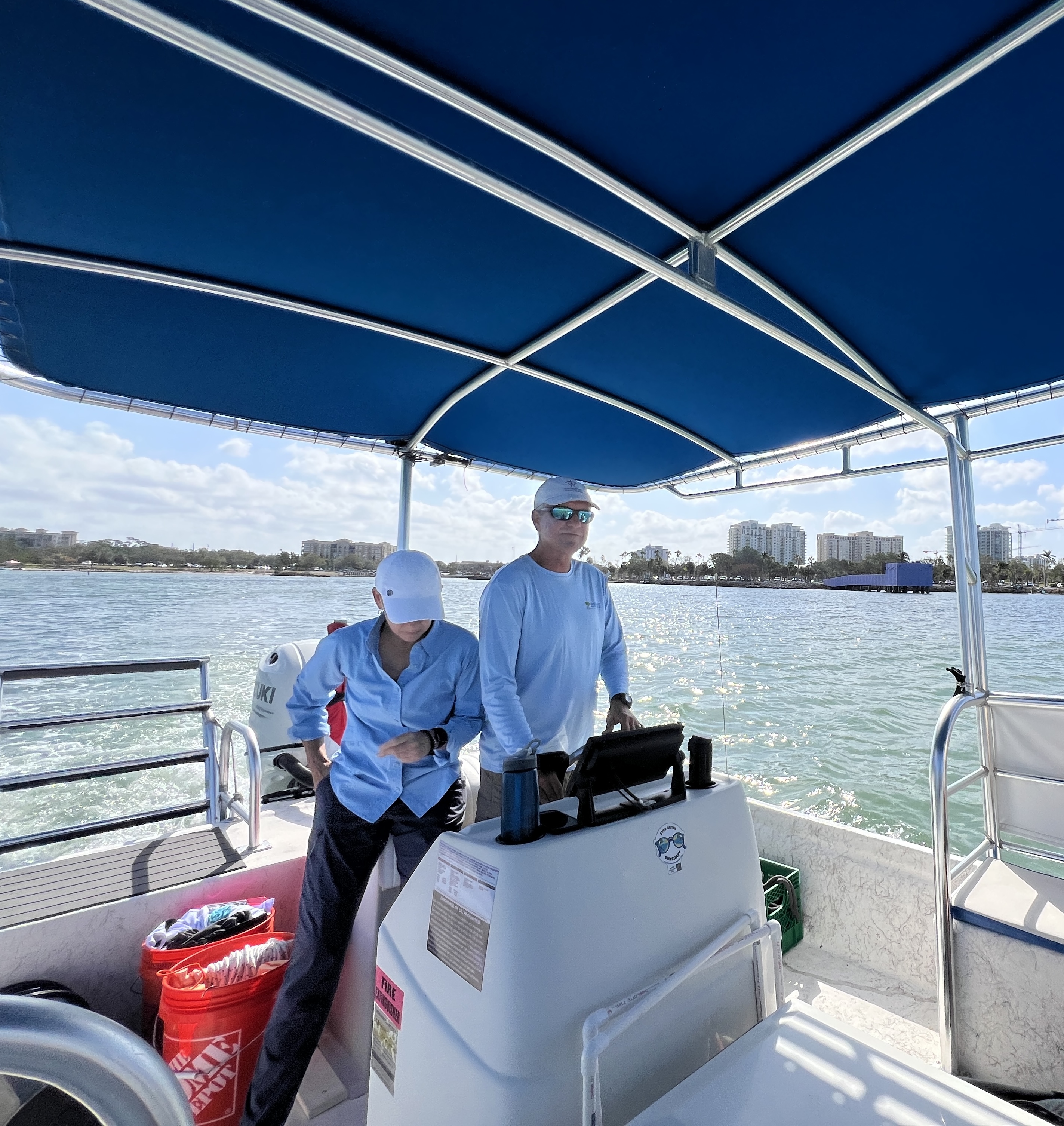
Love being on the water? Put your skills to work for clean water on the Suncoast!
Suncoast Waterkeeper is looking for licensed captains to help get our team out on the water for clean water patrols and monitoring aboard our 25-foot Slayer Skiff.
Join our new Captains Club by registering and sharing your availability. When we need a captain and schedules align, we’ll reach out to get you on the water with our team.
What You Get:
-
Per diem compensation from Suncoast Waterkeeper
-
Suncoast Waterkeeper SPF shirt and hat
-
Time on the water while supporting local water quality monitoring and clean water work
Interested? Sign up for the Captains Club and let us know your availability.
Calling All Dock-Owners: Help Us Keep Monitoring!

We’d like to express our deep appreciation for James Haft, who is kindly letting us use his lift for the summer! Thanks also to the enormous generosity of the Bahia Mar West Marina and the owners’ commitment to clean water; the Suncoast Waterkeeper Patrol Boat has had a safe and well-cared-for home over the years.
Suncoast Waterkeeper is looking for a lift for our 25-ft Slayer Skiff that helps us monitor water quality, investigate pollution sources, and patrol our bays. Keeping our boat on a lift will improve our access to the water, allowing us to get out more often.
Here's the thing: Every day this boat is out on the water is a day we're collecting critical data, spotting problems before they get worse, and protecting the waters you love.
Can you help us? Do you have dock space available, or know someone who might be willing to rent their lift? We'd love to chat about making this work!
Any leads? Contact Abbey Tyrna, Waterkeeper & Executive Director (executivedirector@suncoastwaterkeeper.org)
For a Full Listing of Our Events and Ways to Act, Visit Our Events Page.
To get involved, send an email to [email protected]
Like we are doing? Join our clean water mission!
https://www.suncoastwaterkeeper.org/
Author